Last updated:
Not Every Dripping Skylight Is Actually Leaking
About half of the skylight calls our team fields turn out to be condensation, not a true roof leak. That distinction matters because the fixes are completely different and a misdiagnosis wastes your money.
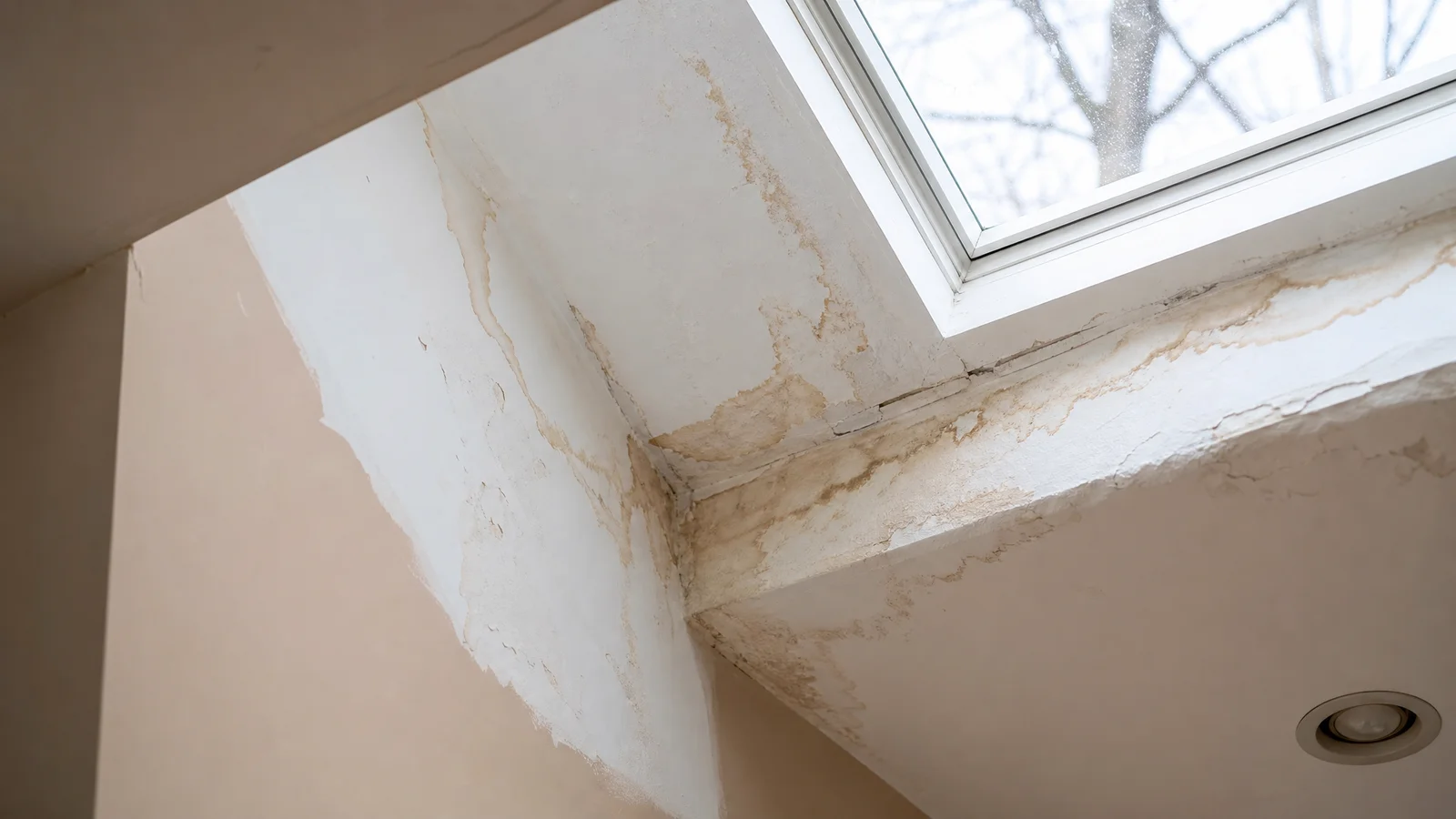
True water intrusion leaves brown stains on the drywall after rain, especially when wind drives water against the glass at an angle. Condensation, on the other hand, produces a uniform fog on the interior glass surface during cold mornings when indoor humidity is high. Keeping your indoor humidity below 50 percent during winter often eliminates the problem entirely.
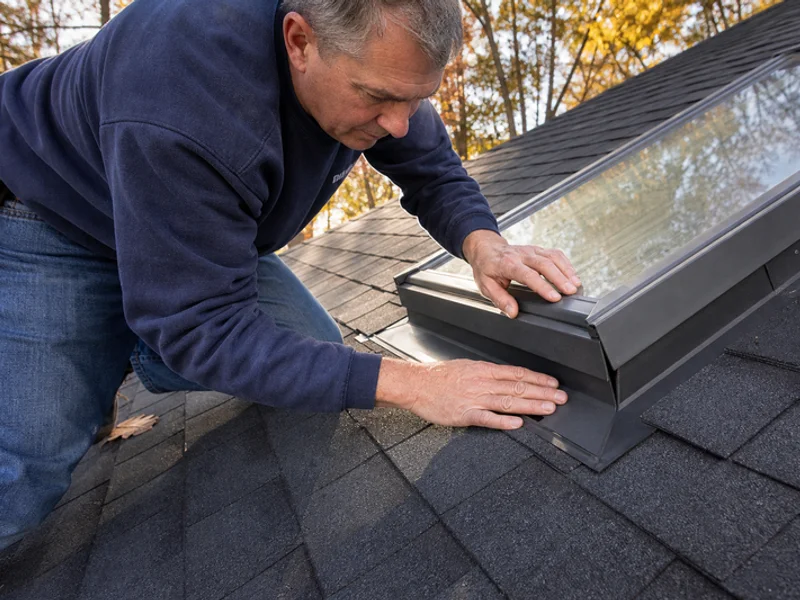
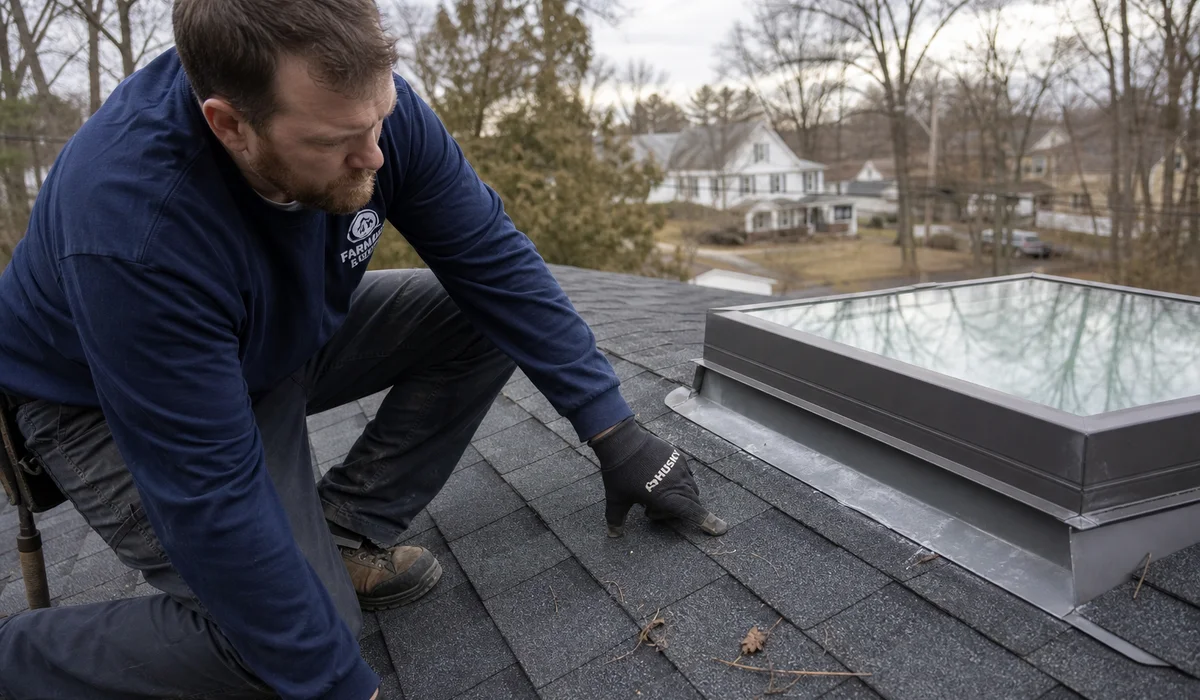
Hartford Roofing Company runs a complete diagnostic before recommending any repair. We check the attic space around the skylight for moisture, inspect the perimeter flashing from the roof side, and test the gasket seal before we suggest spending a dollar.
“Many homeowners are surprised to learn that condensation looks exactly like a roof leak until you test the indoor humidity levels and check the timing of the drip.”
Why Skylights Fail in Central Connecticut
The combination of heavy snowfall, ice formation, and extreme temperature swings in the Hartford area pushes skylight components to their limits faster than in milder climates. Connecticut averages 48 to 51 inches of snow annually, and the freeze-thaw cycle that dominates winter months is particularly destructive to the seals and metal surrounding a skylight.
Here are the five failure points our inspectors check on every call:
- Head flashing above the unit: This is the most common failure point. Snow and ice pile against the uphill side of the skylight and meltwater works its way under the metal.
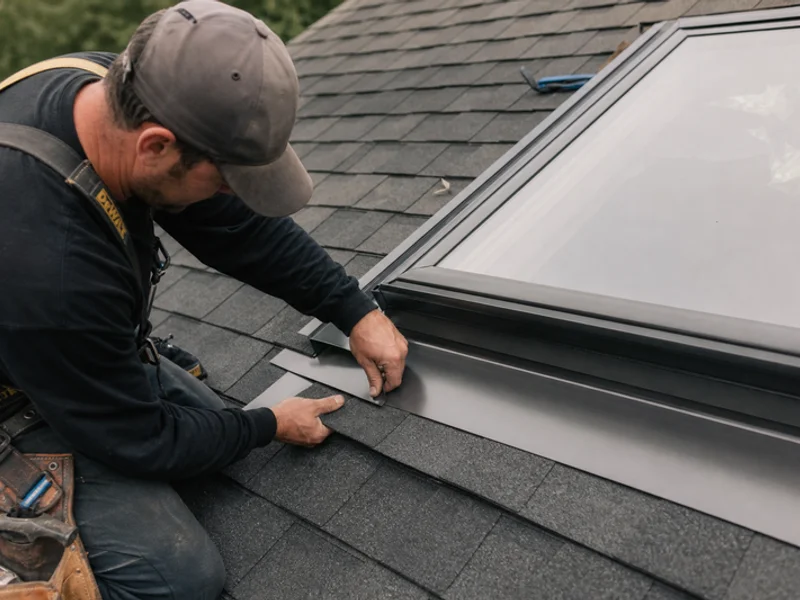
- Step flashing on the sides: After ten or more years, the step flashing rusts or separates from the shingle courses, creating a gap water follows downhill.
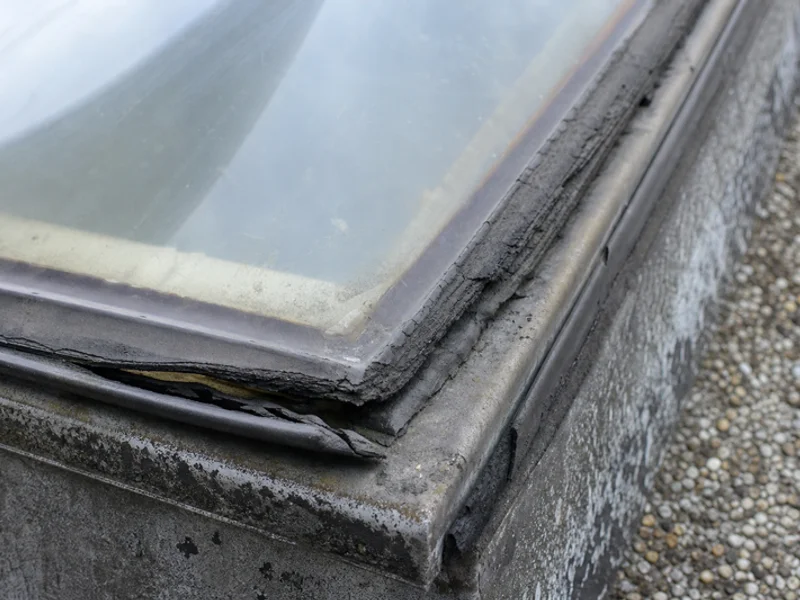
- Rubber gasket seal: The black weather seal around the sash breaks down from UV exposure and thermal shock, cracking open over time.
- Glass-to-frame seal: Extreme temperature swings cause the glass panel to separate from the frame, allowing slow moisture intrusion.
- Fastener penetrations: Improperly sealed nail heads in the flashing kit invite water straight into the roof deck.
Knowing the Difference Between Flashing and Seal Failures
Understanding where the moisture originates determines whether you need a roof-side repair or a unit replacement. Flashing failures require work on the exterior roof surface, while seal failures often mean the skylight itself has reached the end of its useful life.
| Leak Source Type | Typical Lifespan | Primary Cause of Failure | Repair Approach |
|---|---|---|---|
| Metal Flashing | 15 to 20 years | Rust, ice dams, or missing step flashing | High difficulty, requires roof work |
| Rubber Gaskets | 10 to 15 years | UV exposure and thermal shock | Medium difficulty, gasket replacement |
| Glass Seals | 20+ years | Factory defect or severe hail impact | Usually requires full unit replacement |
Reseal or Replace: Making the Right Financial Decision
A basic resealing service typically costs between $225 and $800 in 2026. A full professional replacement ranges from $1,200 to $3,000 depending on the size and slope of the roof. The age of your skylight is the strongest indicator of which direction to go.
Here are the timelines that guide our recommendation:
- Under 10 years old: A targeted flashing repair is almost always the right call. The unit itself still has significant life left.
- 10 to 15 years old: A flashing kit swap and gasket replacement can extend the skylight’s service life by another decade.
- Over 20 years old: Once the gasket has disintegrated and the frame shows visible daylight, exterior sealants will not hold. Replacement with a modern unit is the permanent solution.
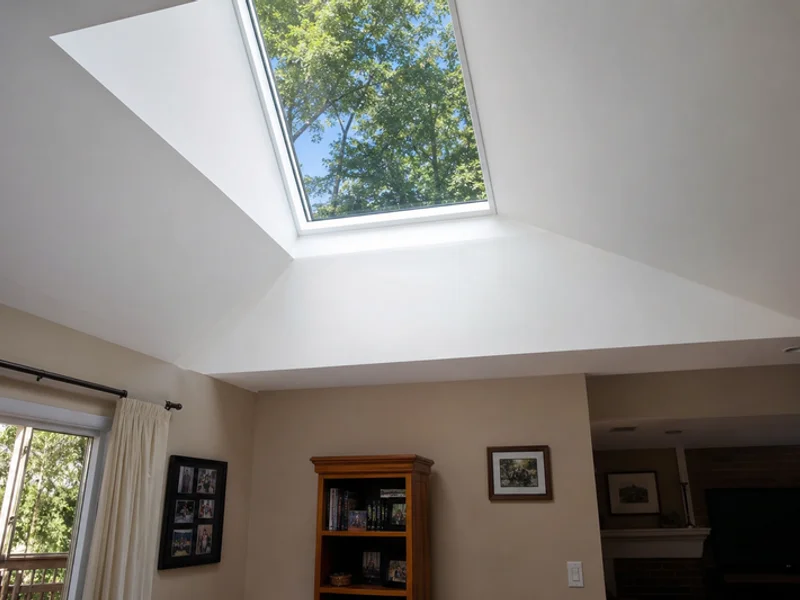
Modern replacement skylights from manufacturers like VELUX feature soft-coat Low-E argon gas glass that significantly reduces winter heat loss. Homeowners in older Hartford neighborhoods like Asylum Hill and the West End, where many homes were built before skylights had modern energy ratings, see a real improvement in comfort after an upgrade.
What to Expect During the Repair Visit
Our process starts with a thorough interior and attic inspection, followed by a roof-side evaluation of every flashing piece and seal around the unit. We photograph everything so you can see exactly what we see.
If the diagnosis points to a repairable issue, the crew reseals or replaces the failed component on the same visit whenever possible. For full replacements, we schedule the work around weather conditions and coordinate any interior drywall or trim repairs that need to happen after the new unit is installed.
Water can travel along the roof sheathing up to six feet before dripping inside, which is why a visual check from inside the house rarely tells the whole story. Our roof-side inspection catches problems that are invisible from below.
We lay out the financial reality for both options so you can make a confident decision on your own time. You will receive hard numbers for the reseal and the replacement, along with our honest recommendation based on what we found.
Protecting Your Investment Year-Round
After completing a repair, we recommend a brief annual visual check of the skylight perimeter during your fall gutter cleaning. Look for lifted flashing edges, cracked sealant, or discoloration on the interior frame. Catching these signs early keeps a small maintenance item from turning into a costly emergency.
If you have a skylight that drips during rain or fogs up every cold morning, contact Hartford Roofing Company for a proper diagnosis. We will tell you honestly whether it needs a $300 reseal or a full replacement, and we will never push the expensive option when the simple fix is the right one.