Last updated:
A roof emergency strikes without warning, and the first few hours determine how much damage your home sustains.
The Environmental Protection Agency warns that mold can begin colonizing wet building materials within just 24 to 48 hours. Every minute of active water intrusion brings you closer to a secondary damage problem that costs far more than the original roof failure.
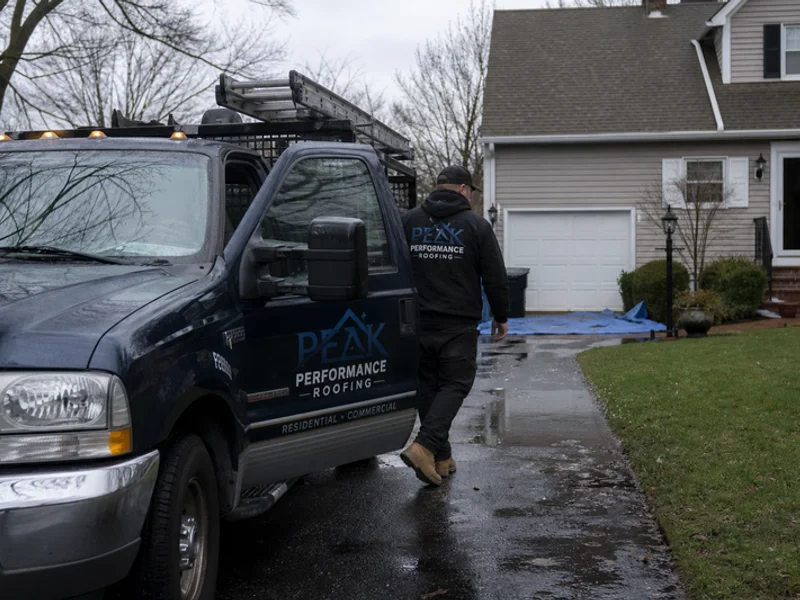
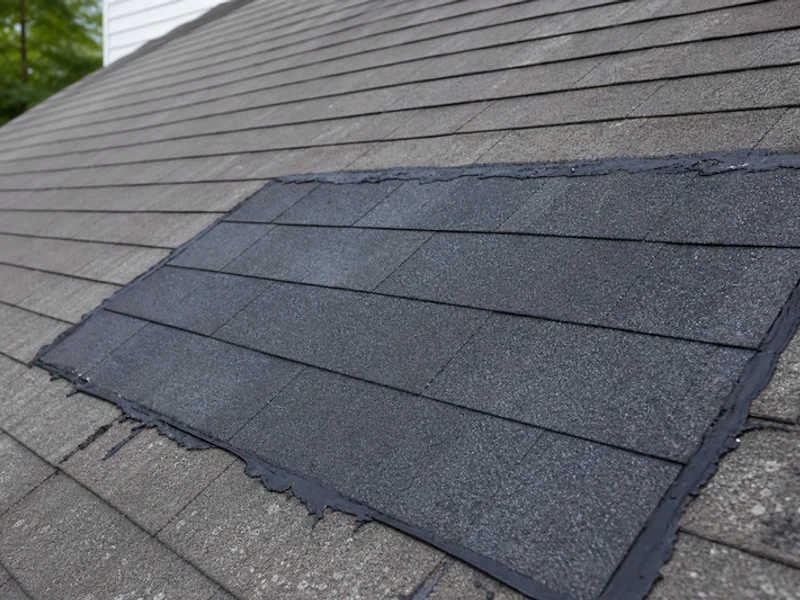
Hartford Roofing Company operates a true 24/7 emergency roof repair service across Hartford and the surrounding towns. Our trucks are pre-loaded with heavy-duty tarps, battens, temporary shingle stock, and sealant so we can respond immediately.
How Water Damage Escalates in a Hartford Home
Central Connecticut’s weather creates unique risks during a roof emergency. Winter storms can dump 10 or more inches of snow in a single event, and when ice dams form along the eaves, meltwater has nowhere to go but into your attic. Summer thunderstorms frequently bring wind gusts strong enough to lift shingle tabs and expose the decking beneath.
Once water finds an entry point, the clock starts. Here is how damage progresses when a roof breach goes unaddressed.
| Time Elapsed | What Happens Inside Your Home |
|---|---|
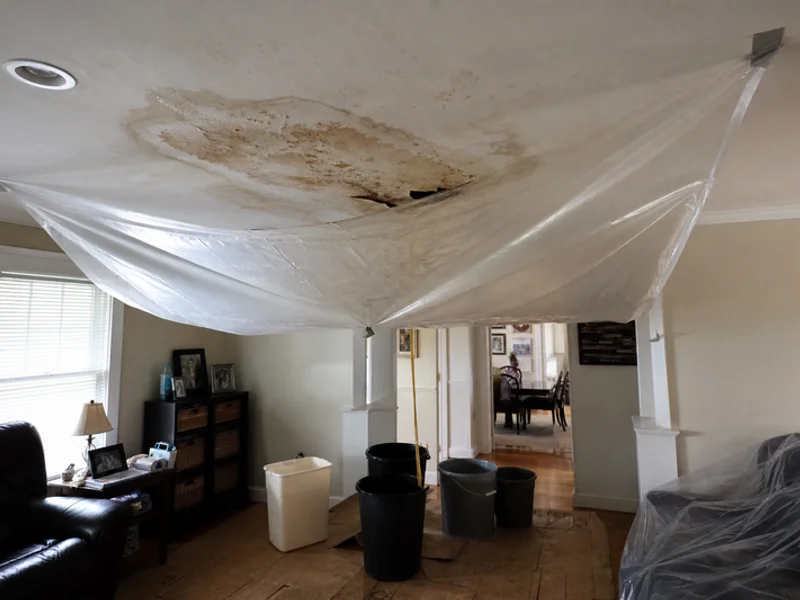
| 1 to 2 Hours | Drywall absorbs moisture, paint bubbles, and ceiling panels begin to sag under the weight. |
| 24 to 48 Hours | Mold spores activate on wet wood and insulation. Fiberglass batt insulation loses its R-value. |
| 3 to 7 Days | Structural framing begins to warp. Full mold remediation becomes necessary, often costing $3,000 or more. |
According to 2026 HomeAdvisor data, the average interior water damage cleanup in Connecticut runs $3,700 to $4,300. A same-day tarp that costs a fraction of that number is the smartest investment you can make during a crisis.
What Happens When You Call Hartford Roofing Company
Our emergency process is designed to stop water intrusion first and plan the permanent repair second. When you call, a dispatcher confirms the situation and sends the nearest available crew.
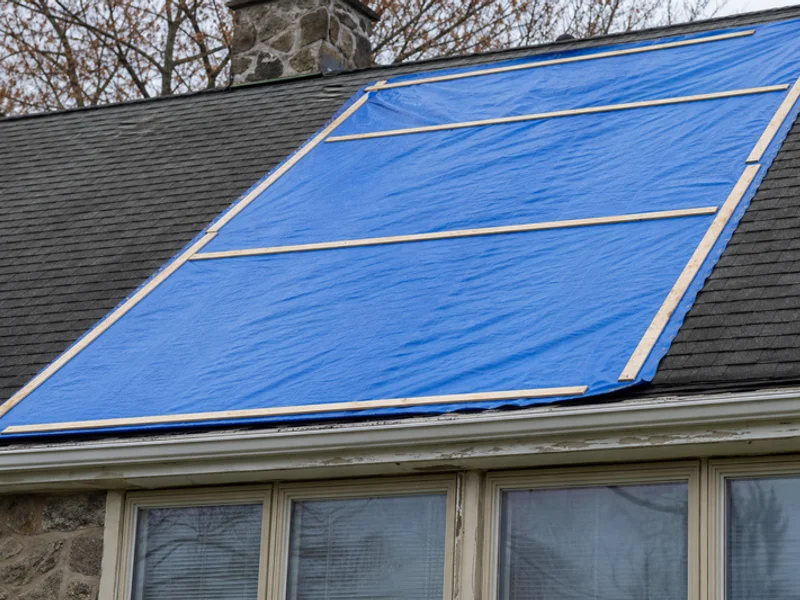
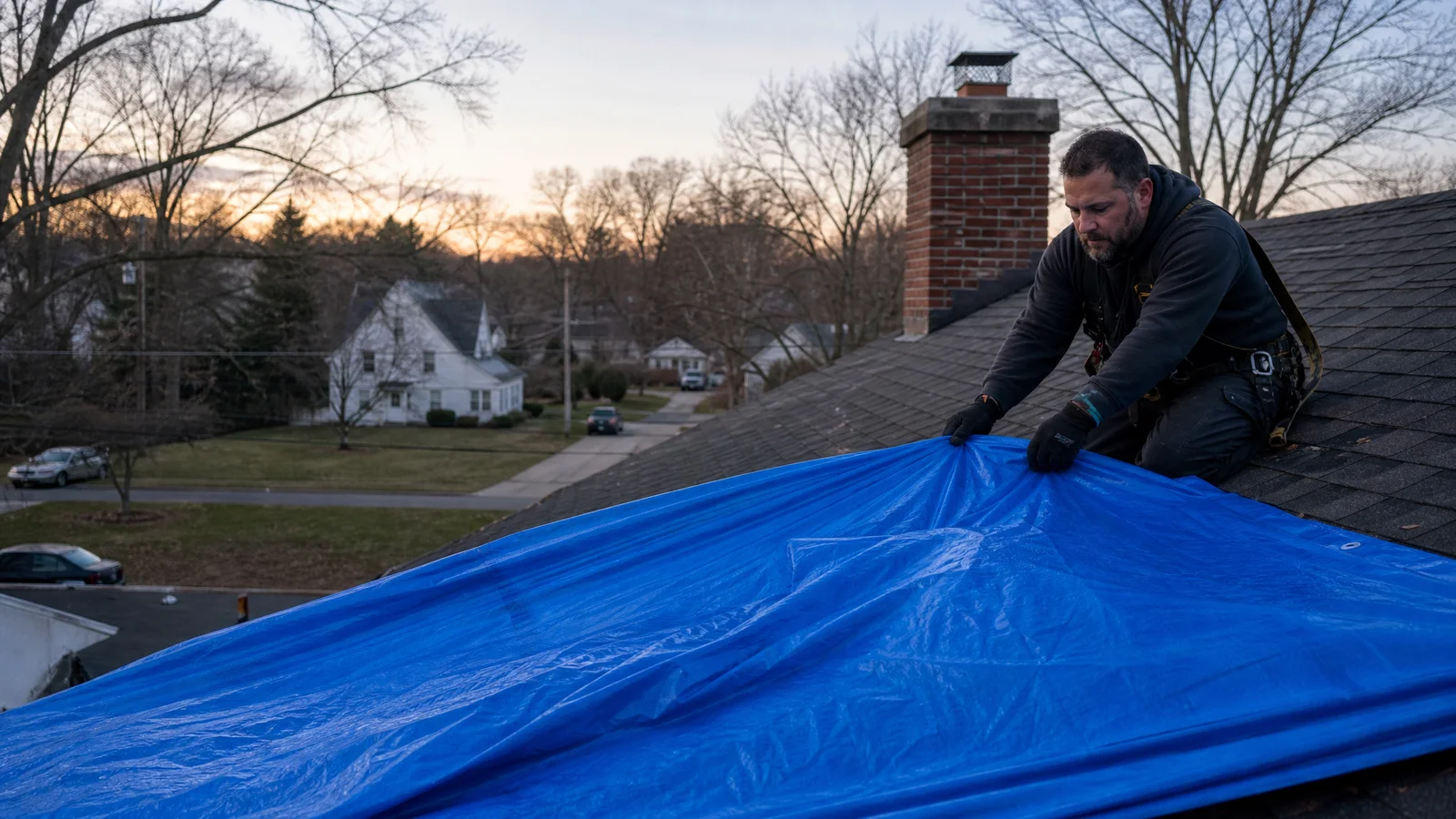
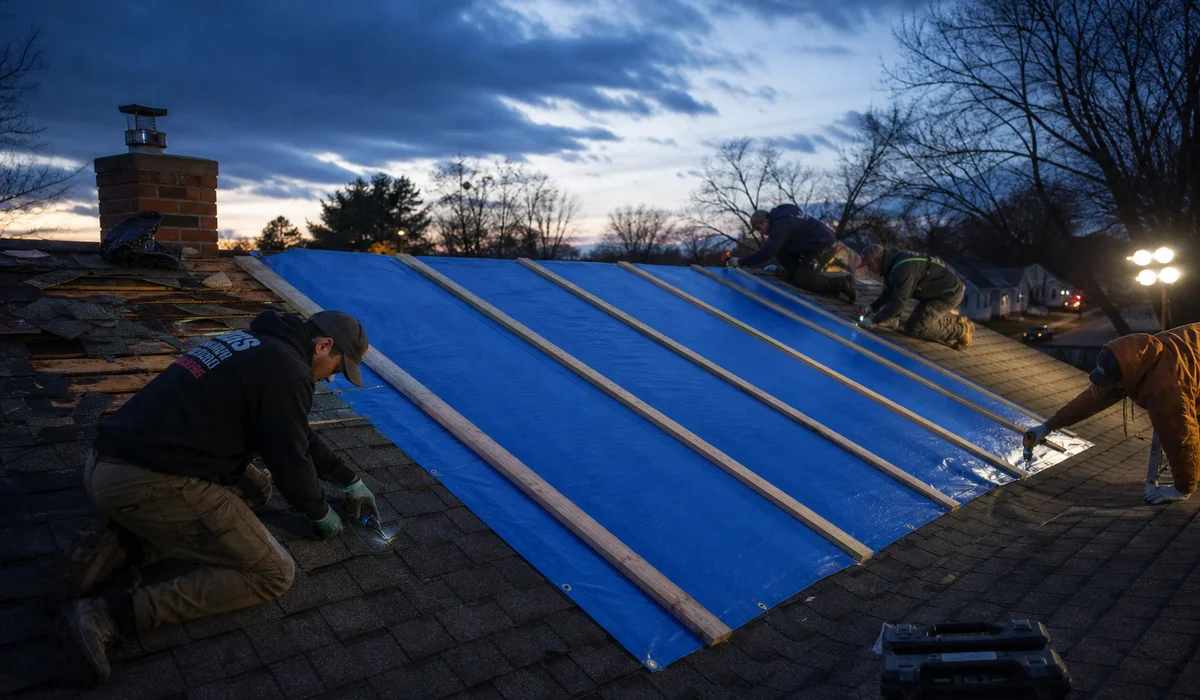
On arrival, the team assesses the roof from the safest access point and identifies the breach. The affected area gets locked down with a professional-grade 12-mil to 16-mil polyethylene tarp secured with 2x4 wood battens fastened directly into the decking. This is not a hardware-store plastic sheet draped over the ridge. FEMA recommends at least a 6-mil sheet for temporary roof protection, and we exceed that standard on every call.
While the exterior is being secured, a second crew member works with you inside to set up water catches, identify saturated insulation, and start the drying process as quickly as possible.
Insurance Documentation That Protects Your Claim
Strong photographic evidence taken during the emergency visit is often the single most important factor in your insurance payout. Adjusters want timestamped photos showing the initial damage, the source of water intrusion, and the extent of interior impact.
Our crew documents everything while the damage is fresh. You receive a complete photo package and written damage assessment that you can hand directly to your adjuster. Connecticut policies typically include a “prompt notice” clause that expects damage reports within 48 to 72 hours, and our documentation helps you meet that deadline with strong evidence.
Common Emergency Scenarios in Central Connecticut
Living near the Connecticut River corridor means Hartford-area homes face specific weather threats that drive emergency roof calls. Nor’easters deliver heavy snow and sustained wind that can peel entire sections of shingles from a ridge. Summer convective storms produce hail and microbursts that punch through aging roofing materials.
The most common emergency calls we handle include:
- Wind-lifted shingles exposing the roof deck during a Nor’easter
- Tree limb strikes from mature oaks and maples, especially in the West End and Blue Hills neighborhoods
- Ice dam breaches where meltwater forces its way under the shingle field along the eaves
- Complete section failures on older roofs that have been patched multiple times
- Flat-roof membrane tears on commercial buildings in the North Meadows industrial area
We have handled each of these scenarios across Hartford, West Hartford, Wethersfield, and East Hartford. Local experience matters because we already know the common building styles, typical roofing materials, and the specific weather patterns that cause failures in this part of the state.
From Emergency Tarp to Permanent Repair
Once the tarp is secured and the interior is stabilized, the immediate crisis is over. You have time to breathe and consider your options without water actively destroying your home.
Insurance companies generally allow a temporary tarp to remain in place for 30 to 90 days. That window gives you time to get the claim processed and choose the right materials for a permanent fix. Our estimators will scope the full repair or replacement and provide a written, itemized quote.
”Having clear photo evidence of the initial damage makes a massive difference in your final payout. We document everything while it’s fresh so your adjuster sees the full story.”
The same Hartford Roofing Company crew that handled your emergency also performs the permanent repair. One team from start to finish means no details get lost in a handoff between companies. Whether the fix is a section repair or a full replacement, you work with people who already know your roof.
Do Not Wait on a Temporary Patch
UV rays eventually break down even the heaviest tarp material. Leaving a temporary cover in place for months past its useful life creates a false sense of security. We schedule the permanent work before that degradation begins, keeping your home protected through the transition.
If you are dealing with an active roof leak or storm damage right now, pick up the phone. Hartford Roofing Company dispatches emergency crews 24/7 across Hartford County. We will stop the water, document the damage, and build a clear plan to restore your roof for good.