Last updated:
Why Most Roof Leaks Get Misdiagnosed
Water rarely enters your home directly above the ceiling stain you are staring at. It typically runs along the roof deck, jumps to a rafter, tracks down a nail, and drops out somewhere else entirely. That disconnect between entry point and exit point is why so many homeowners pay for a patch that fails after the next storm.
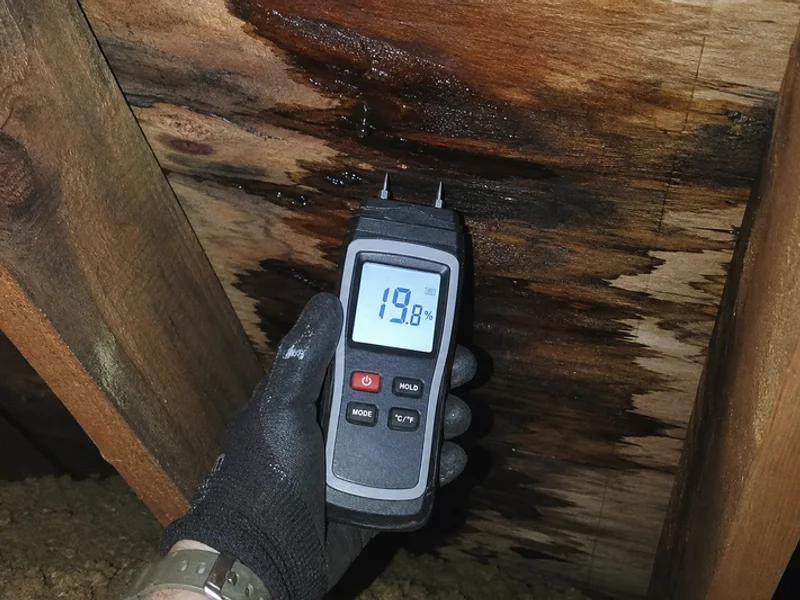
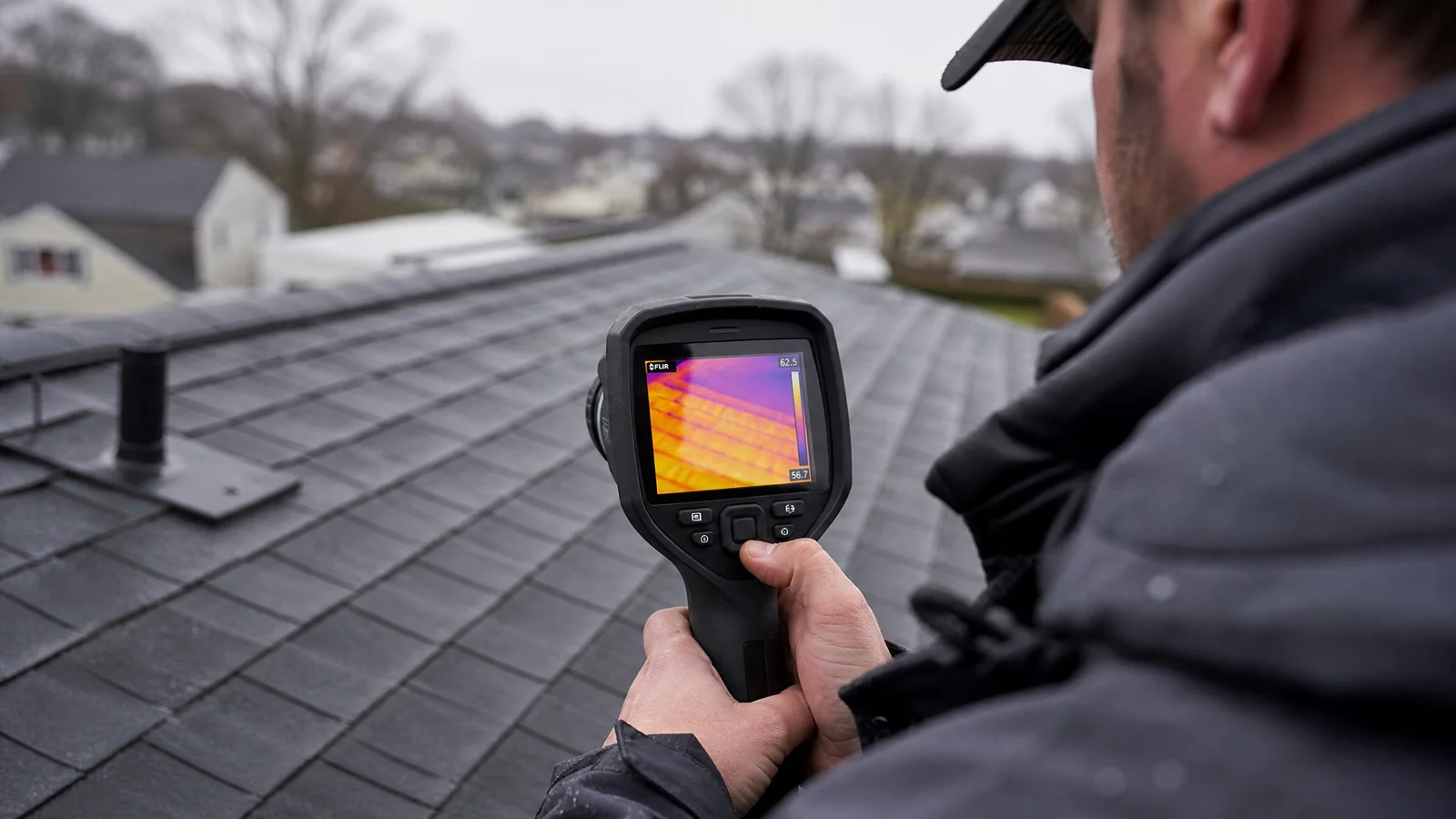
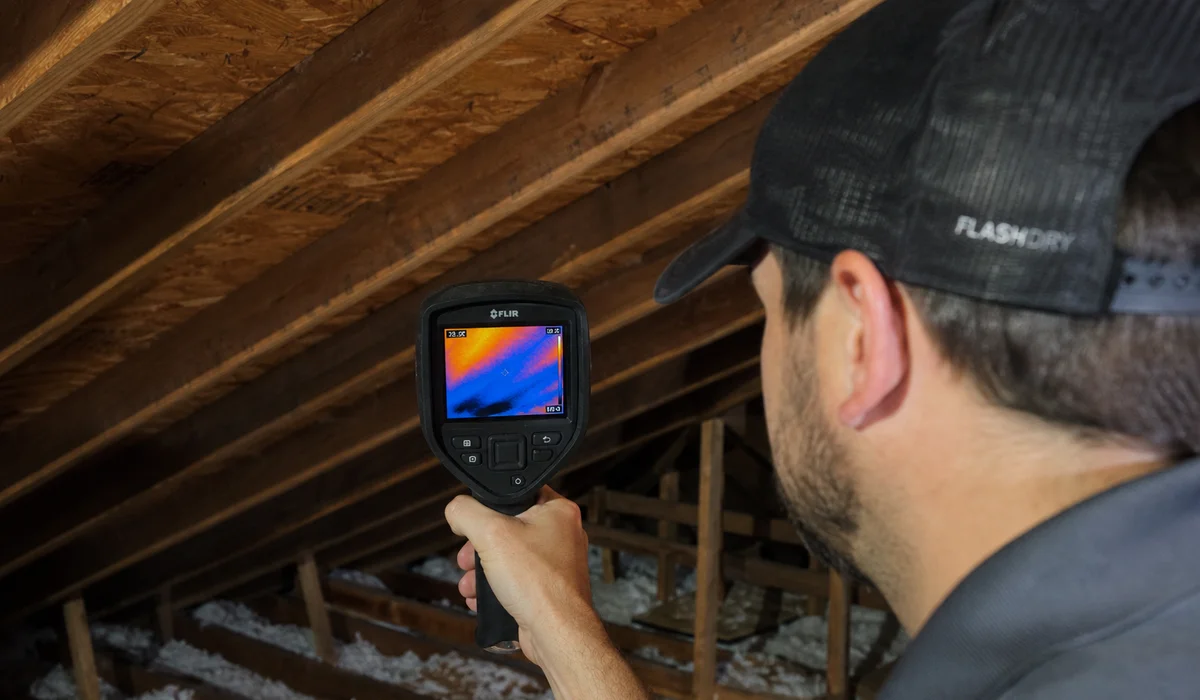
Hartford Roofing Company starts at the stain and works backward to find the actual entry point. Instead of guessing, our crew uses advanced tools like the FLIR ONE Edge Pro thermal camera and the Tramex ME5 moisture meter. This equipment tracks the invisible moisture path through your attic without tearing up drywall, giving us a precise repair target.
“Sealing over a leak buys you a season. Repairing the actual failure point stops it for good. That difference is the entire value of proper leak detection.”
The Six Most Common Leak Sources in Hartford County
Hartford County receives an average of 47 inches of rain and over 50 inches of snow every year. The relentless freeze-thaw cycle wears down roofing components long before their rated lifespan expires. Here are the failure points we check on every inspection:
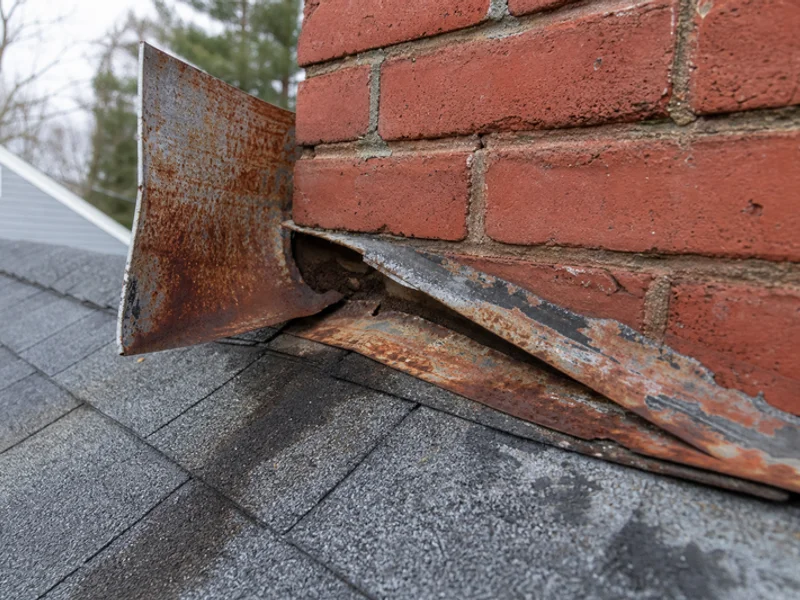
- Flashing failures: Step and counter flashing at chimneys, walls, and skylights account for the majority of stubborn leaks. Freeze-thaw cycles crack the metal-to-masonry seal.
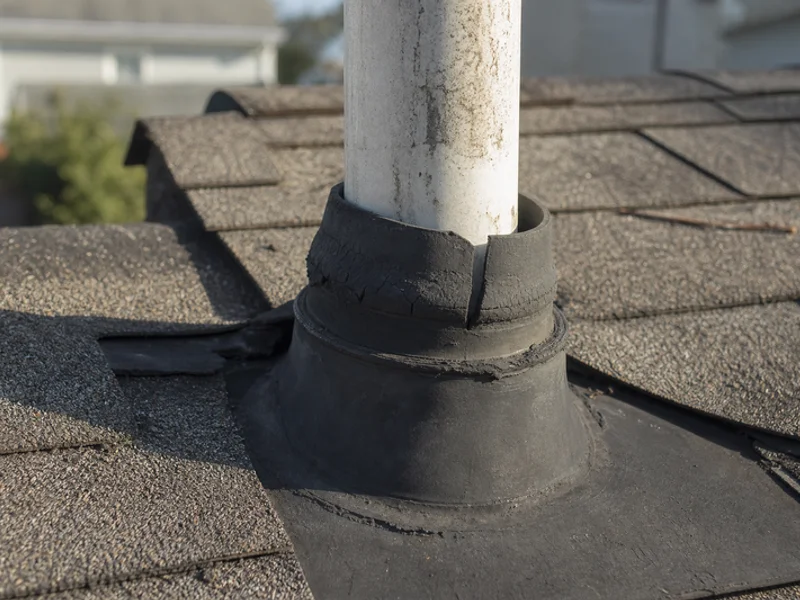
- Pipe boots: Rubber gaskets around plumbing vents crack after 10 to 15 years of sun exposure, creating pinhole leaks that drip into the attic.
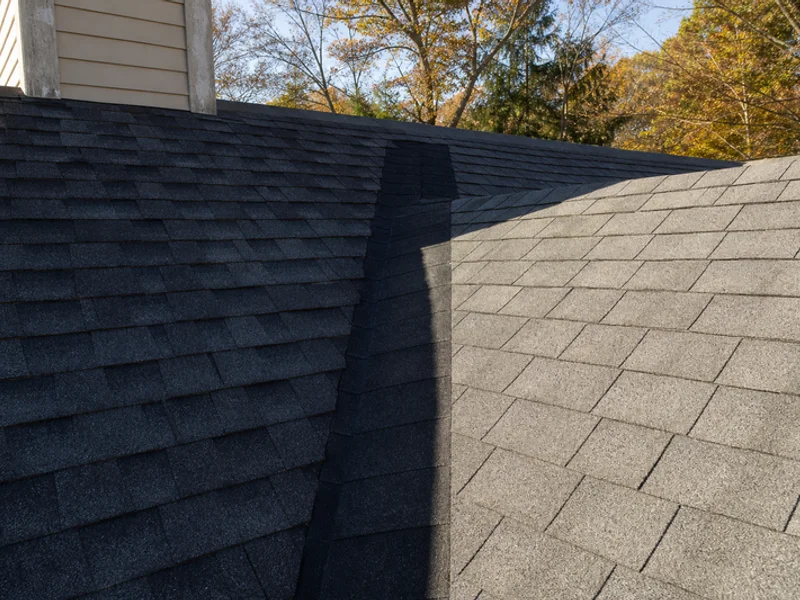
- Valley failures: Closed-cut valleys fail when worn shingles or trapped debris force water underneath the overlapping course.
- Missing or torn shingles: Nor’easters and summer thunderstorms cause wind lift and impact damage that exposes the deck beneath.
- Nail pops: Nails backing out of the decking over time create tiny holes that let water through during every rain event.
- Skylight seals: Gasket and perimeter flashing failures at skylights allow slow, steady moisture intrusion that shows up as brown ceiling stains.
When Each Component Typically Fails
Knowing the expected lifespan of vulnerable roof parts helps you anticipate problems before they cause interior damage.
| Roof Component | Typical CT Lifespan | Common Failure Cause |
|---|---|---|
| Rubber Pipe Boots | 10 to 15 years | UV degradation cracks the rubber gasket |
| Chimney Flashing Sealant | 5 to 10 years | Freeze-thaw expansion breaks the seal |
| Architectural Shingles | 20 to 30 years | Wind uplift and storm impact |
| Skylight Gaskets | 15 to 20 years | Perimeter seal dries out from thermal cycling |
How Our Detection Process Works
Our three-zone inspection method traces the leak from the interior ceiling stain, through the attic, and out to the roof surface. Each zone reveals information that the others cannot.
Inside the home, we measure moisture levels in the ceiling and walls around the stain to determine how far the water has spread. In the attic, thermal imaging reveals wet insulation and damp sheathing that is invisible to the naked eye. Water-stained rafters and decking show us the direction of flow and narrow down the entry area.
On the roof itself, we work outward from the suspected entry zone, systematically checking every flashing detail, pipe boot, valley, and shingle field until we find the source. When conditions allow, we perform a controlled hose test to reproduce the leak and confirm the entry point before starting the repair.
Targeted Repairs That Solve the Problem Permanently
Once we identify the actual failure point, the repair is targeted and specific. We carry common repair materials on every truck, which means simple flashing reseals, boot replacements, and shingle swaps often happen on the same visit as the detection.
For more complex repairs involving multiple failure points, valley reconstruction, or decking replacement, we provide a written estimate and schedule the work. Every repair is backed by our leak-free workmanship warranty. If water returns through the same failure point, the return visit costs you nothing.
When Repair Is No Longer the Right Call
We believe in honest assessments, and sometimes that means telling you the repair path is a dead end. If your roof is past 20 years old with multiple active leak sources, widespread granule loss, and soft decking, continued spot repairs become more expensive than a replacement over time. We will tell you that directly and provide both options so you can make the right financial decision.
For an isolated failure on an otherwise sound roof, a properly targeted repair is absolutely the right call. The key is finding the real source, not guessing at the obvious spot.
If you are dealing with a water stain on your ceiling, a damp attic, or a leak that keeps coming back after previous repairs, contact Hartford Roofing Company. We will trace the leak to its actual source and fix it permanently. Same-day service is available for active leaks across Hartford and the surrounding communities including West Hartford, East Hartford, Wethersfield, and Glastonbury.