Last updated:
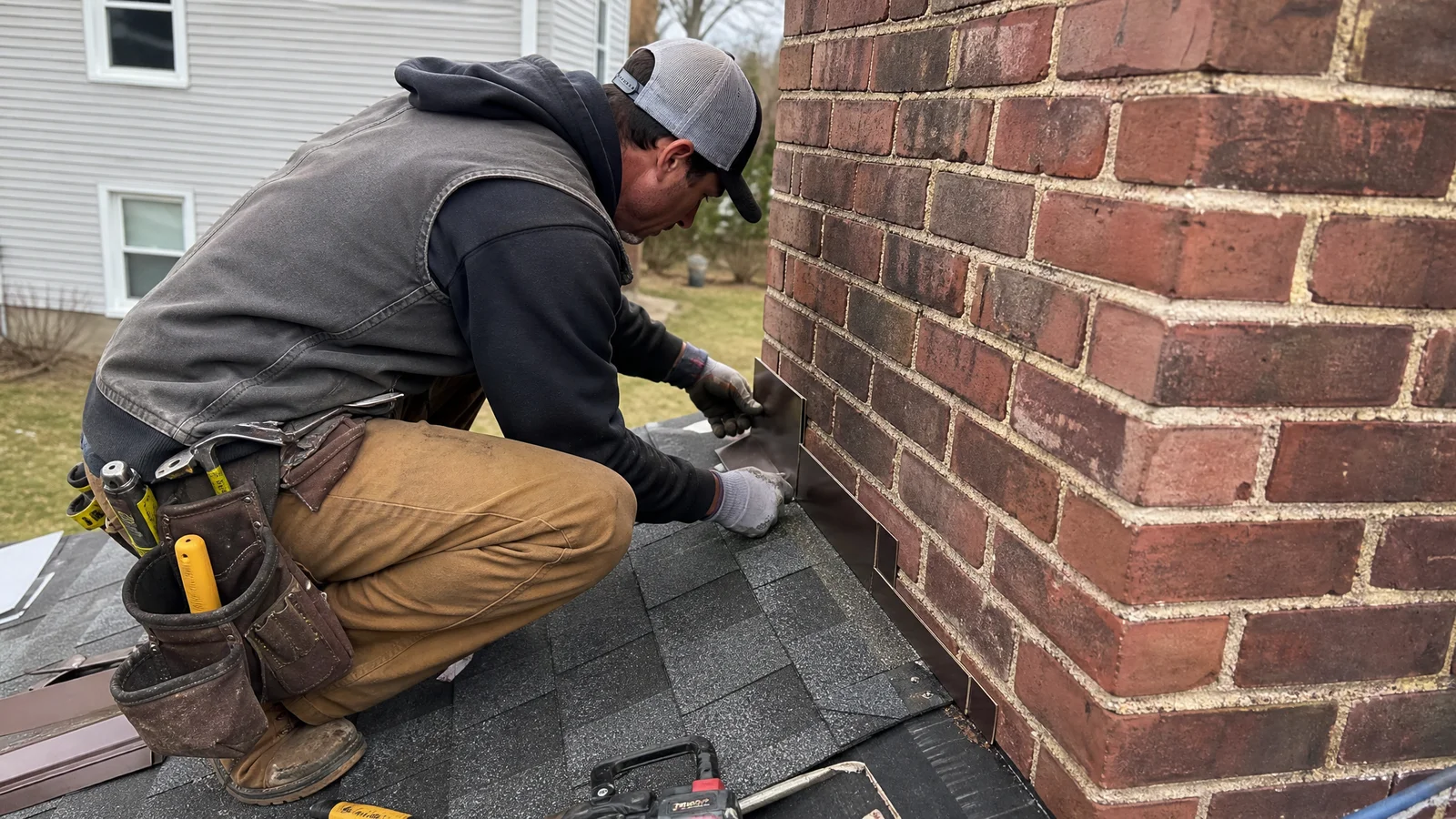
The Real Reason Your Chimney Keeps Leaking
National roofing data from 2026 shows that nearly 90% of all roof leaks start at penetrations and transitions, not in the shingle field. Chimneys, wall junctions, skylights, and valleys are the most vulnerable points on any roof because they require multiple pieces of metal flashing to create a watertight seal against the surrounding roofing material.
When that seal fails, water finds the joint fast and interior damage follows. Hartford Roofing Company specializes in diagnosing and repairing these flashing failures across Hartford and Hartford County.
If a previous roofer “fixed” your chimney leak by squeezing a bead of caulk over the old flashing, the leak will return. Sealant is a temporary measure, not a structural repair. Our crew removes the failed material entirely and installs new flashing the right way.
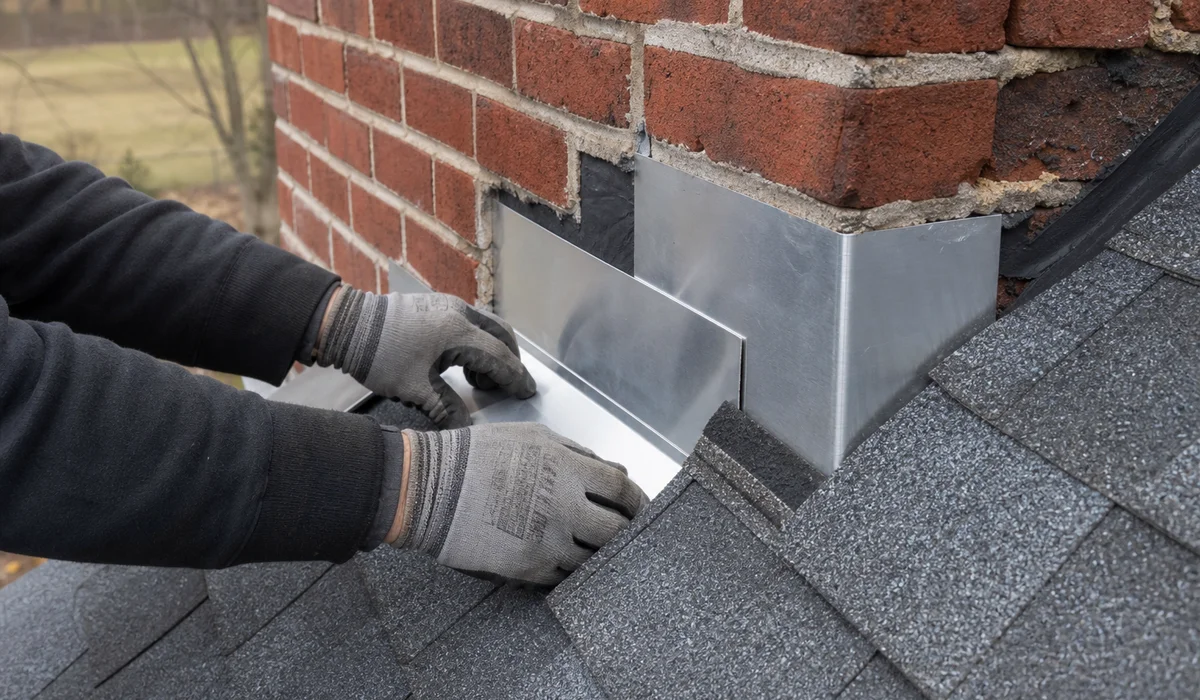
How Proper Chimney Flashing Works
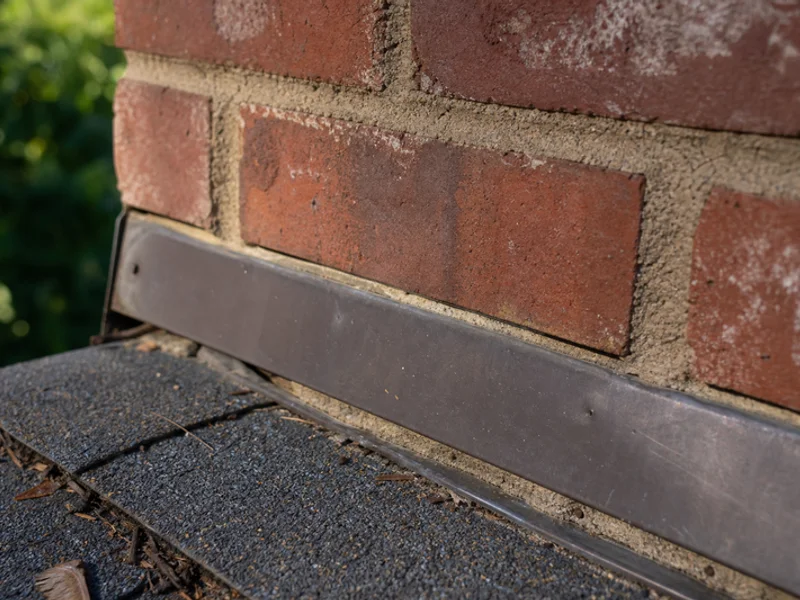
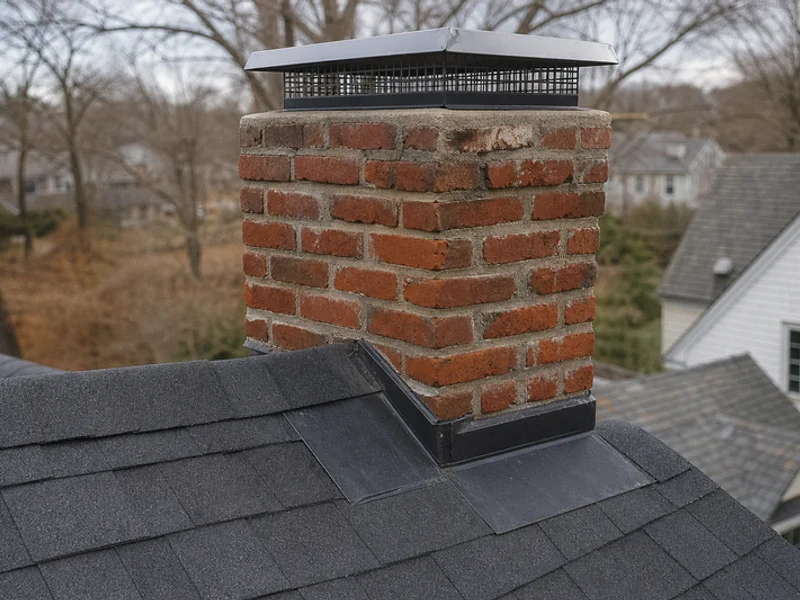
A properly flashed chimney uses two interlocking layers of metal. Step flashing sits beneath each shingle course and turns up against the chimney wall. Counter flashing sets into a reglet cut in the mortar joint and folds down over the top of the step flashing, creating a layered barrier that sheds water at every course.
This two-layer system has worked for over a century because it accounts for the different rates at which the chimney masonry and the roof structure move. The chimney settles and expands independently from the roof framing, and the overlapping flashing layers absorb that movement without breaking the seal.
Problems arise when installers skip the counter flashing, use incompatible metals, or rely on surface sealant instead of proper mortar-bed installation. Connecticut’s freeze-thaw cycles punish these shortcuts within a few winters.
Choosing the Right Flashing Metal
The metal you select affects how long the repair holds up. We help homeowners choose the right option for their specific chimney and budget.
| Material | Average Lifespan | Cost Factor | Best Used For |
|---|---|---|---|
| Aluminum | 20+ Years | Most Affordable | Standard residential chimney and wall repairs |
| Copper | 50+ Years | Premium | Historic homes and high-end properties in the West End and Asylum Hill |
| Lead | 30+ Years | Mid-Range | Contouring to uneven stone or irregular masonry chimneys |
Flashing Repairs We Perform
Local weather conditions in the Hartford area punish every sealed joint on your roof. Average costs for professional chimney flashing repair in Connecticut generally run between $300 and $1,500 in 2026, depending on the chimney size and the metal selected.
Here is the full scope of flashing work we handle:
- Chimney step and counter flashing in aluminum, copper, or lead
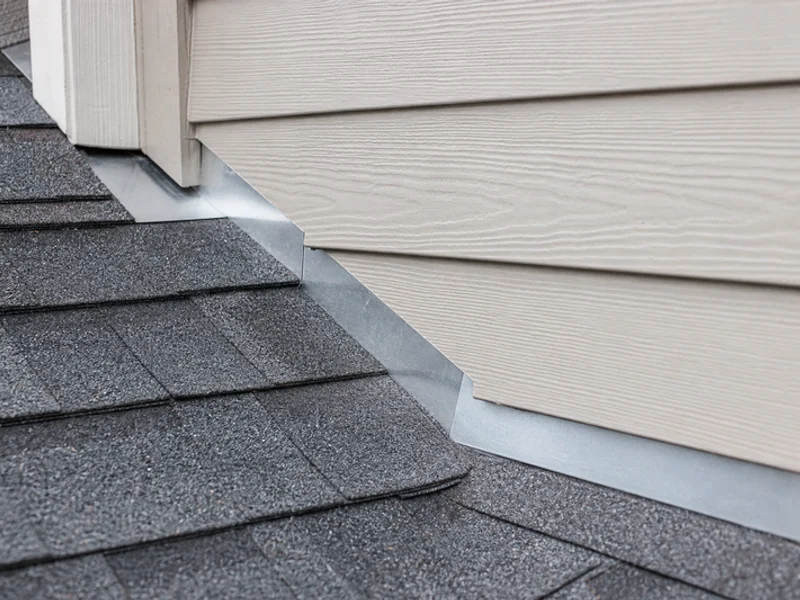
- Sidewall flashing on dormers and additions
- Apron flashing at roof-to-wall junctions
- Skylight perimeter flashing
- Valley flashing on open and closed-cut valleys
- Rusted or lifted flashing on older Connecticut roofs
We always provide a transparent, upfront quote before starting any work. No surprise charges, and no pressure to approve work you do not need.
Early Warning Signs of Flashing Failure
You can often catch a flashing problem before water starts dripping onto your living room floor. Knowing what to look for during a routine visual check can save you thousands in interior repair costs.
Efflorescence on Chimney Bricks
One major red flag is efflorescence, a chalky white deposit that appears on the exterior face of your chimney bricks. This powdery residue forms when trapped moisture dissolves mineral salts in the masonry and pushes them to the surface as the water evaporates. If you see white staining on the brick above or around your roofline, the mortar joints or flashing seals are already allowing water behind the chimney face.
Interior Ceiling Stains After Rain
Brown or yellowish water stains on the ceiling near a chimney or wall junction are a clear indicator of active flashing failure. The stain often appears several feet from the chimney because water travels along the roof deck and framing before dropping out at the lowest point.
Visible Gaps Between Metal and Masonry
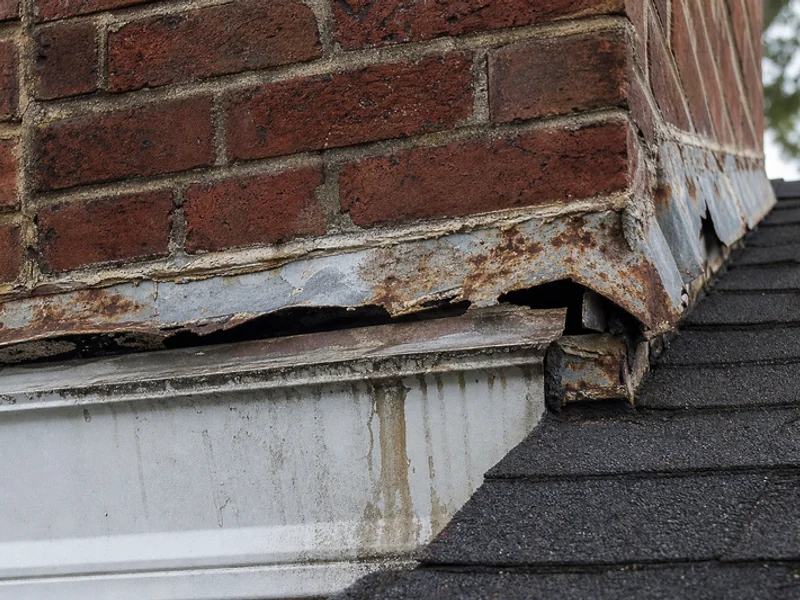
From the ground with binoculars, or safely from a ladder, look for visible separation between the counter flashing and the chimney face. Any gap, rust discoloration, or missing sealant at the metal-to-masonry interface indicates a failure in progress.
Professional-Grade Sealant vs. Hardware Store Caulk
When secondary sealant is genuinely needed alongside new metal flashing, the product choice matters significantly. Basic hardware store silicone caulk breaks down within a single season under UV exposure and building movement.
Our technicians use polyurethane sealants like Vulkem or copolymer rubber products like Geocel. These professional-grade products handle thermal expansion, UV degradation, and the constant movement between the chimney masonry and the roof structure. They are designed to last, not to fill a tube cheaply.
Historic Hartford Homes Require Extra Care
The Victorian, Queen Anne, and Colonial Revival homes in neighborhoods like Asylum Hill and the West End often have complex chimney configurations, original copper flashing details, and irregular masonry profiles that require careful material matching. A standard aluminum step-flash job on a historic brick chimney near the Mark Twain House would look wrong and may not seal properly against the irregular masonry surface.
We evaluate each chimney individually and recommend the flashing metal and installation method that fits the architecture, the masonry condition, and the homeowner’s budget.
If your chimney leaks after rain, shows white staining on the bricks, or has been “repaired” with visible caulk, contact Hartford Roofing Company for a proper assessment. We will tell you exactly what failed and give you a clear, honest plan to fix it for good.