Last updated:
How Ice Dams Form on Hartford Roofs
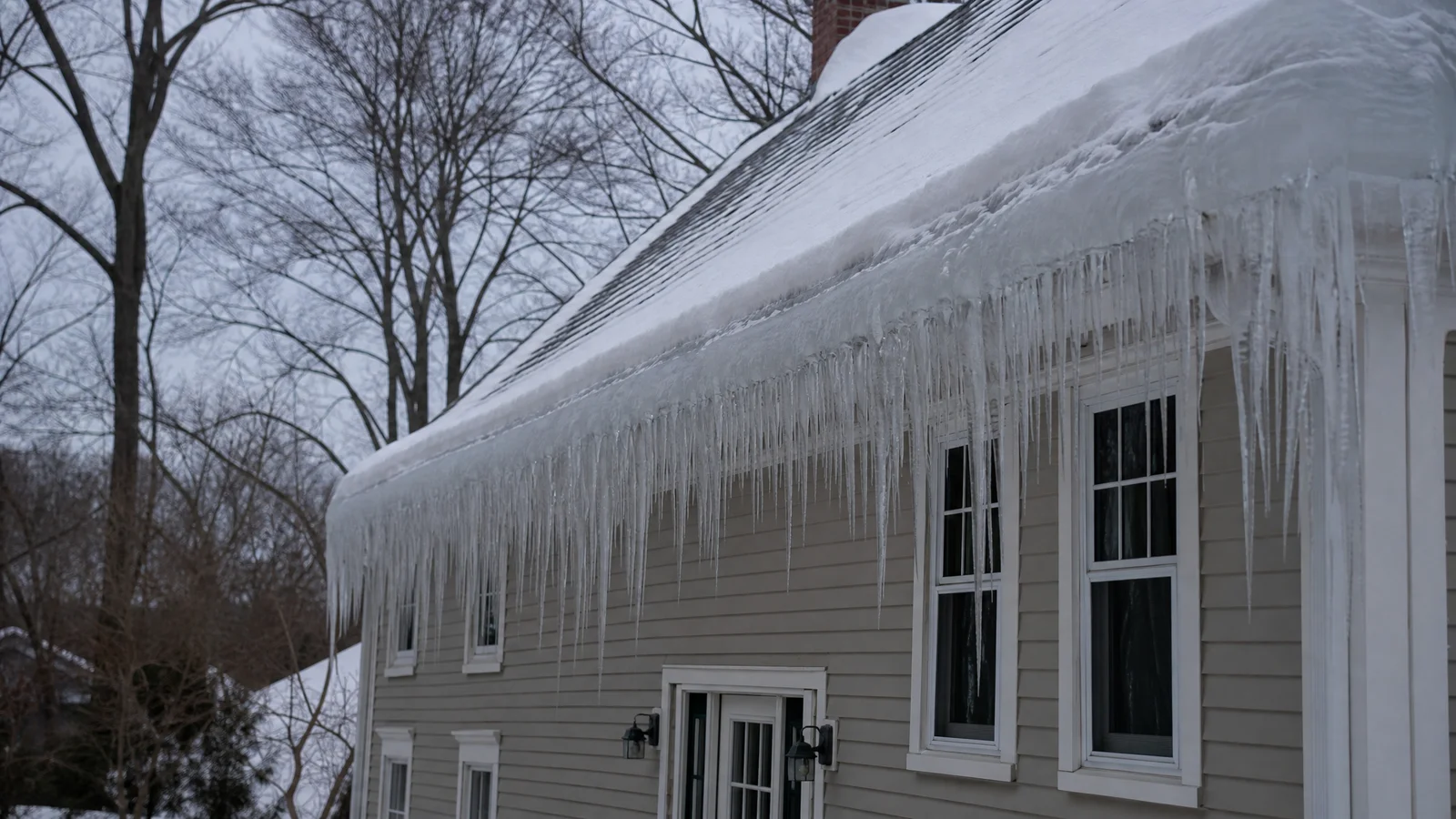
Those thick icicles hanging from your gutters on a January morning may look like a normal part of winter, but they are usually the first visible sign of a destructive cycle happening above your ceiling.
Ice dams form through a specific temperature trap. Warm air leaking from your living space into the attic heats the roof deck, melting the snow sitting on the upper sections of the roof. That meltwater runs downhill until it reaches the cold overhang at the eaves, where it refreezes into a solid ridge of ice. As the ridge grows, water pools behind it and forces its way under the shingles and into your home.
Hartford averages 48 to 51 inches of snow annually, and the freeze-thaw cycles that dominate Central Connecticut winters create ideal conditions for dam formation. When trapped meltwater reaches the interior, moderate water damage repairs average around $3,000 or more.
“A properly insulated and ventilated roof is the single best defense against expensive winter water damage. The goal is to keep the roof deck cold so snow does not melt unevenly.”
The Root Cause: Unbalanced Attic Ventilation
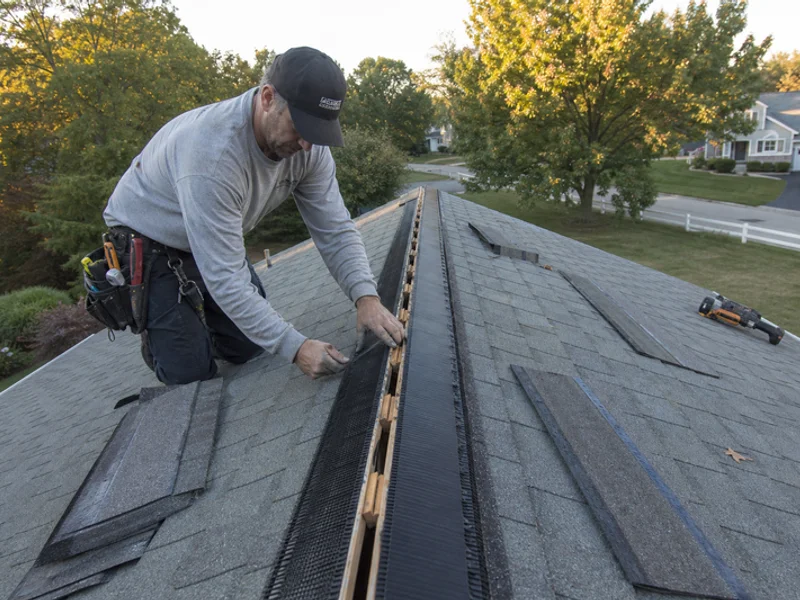
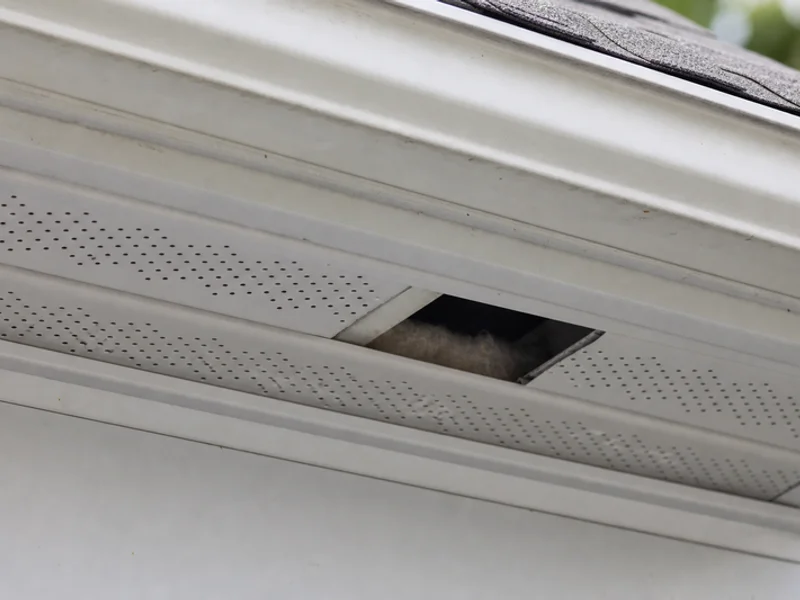
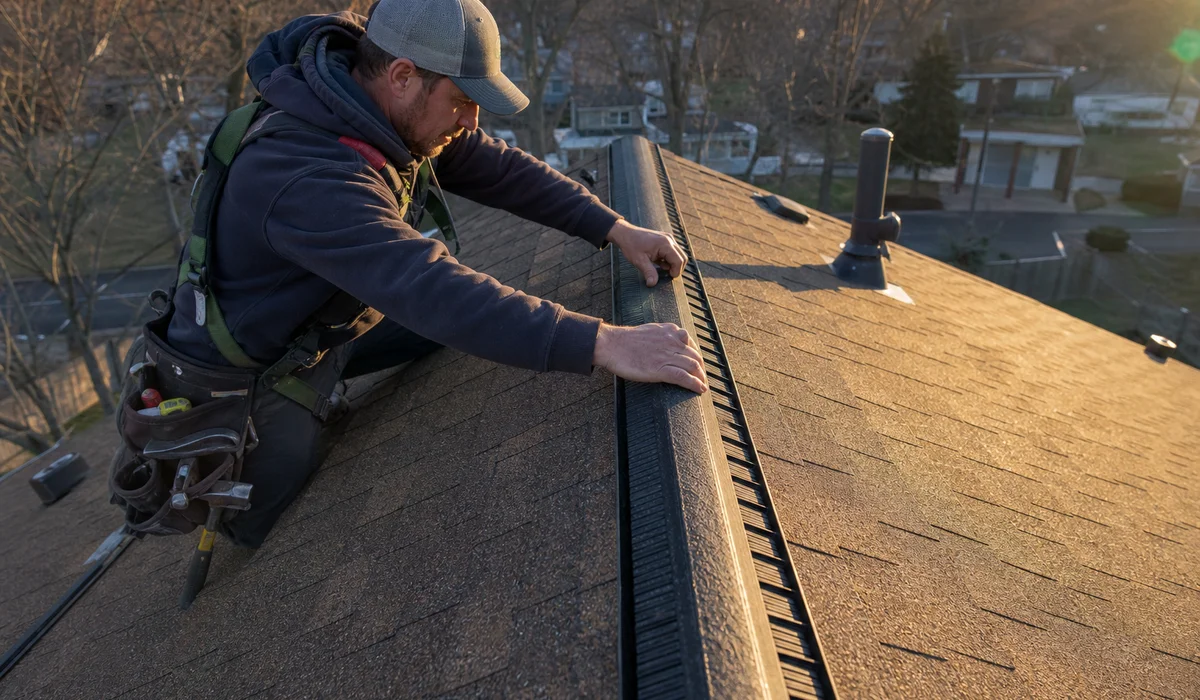
Most ice dam problems are ventilation problems. A healthy attic maintains a temperature close to the outside air, which prevents uneven snowmelt. That requires a balanced system where cold air enters through soffit vents at the eaves and warm air exhausts through ridge vents at the peak.
Many older Hartford homes, particularly the Victorian and Colonial Revival houses in Asylum Hill and the West End, were built long before modern ventilation standards existed. These homes often have inadequate soffit openings, no ridge vents, or insulation that blocks the soffit intake entirely. The result is a hot attic that melts rooftop snow at an alarming rate.
Hartford Roofing Company starts every ice dam project with a full attic ventilation audit. We measure your current intake versus exhaust capacity, check insulation depth, and identify any baffles or gaps that are allowing conditioned air to heat the roof deck.
What Proper Ventilation Looks Like
The standard ventilation ratio for residential roofs is 1:150, meaning one square foot of net free ventilation area for every 150 square feet of attic floor. That ventilation needs to be split evenly between intake at the soffits and exhaust at the ridge.
| Ventilation Component | Location | Role in Ice Dam Prevention |
|---|---|---|
| Soffit Vents | Underneath the eaves | Pull in cold outside air to cool the attic floor and keep the deck temperature low. |
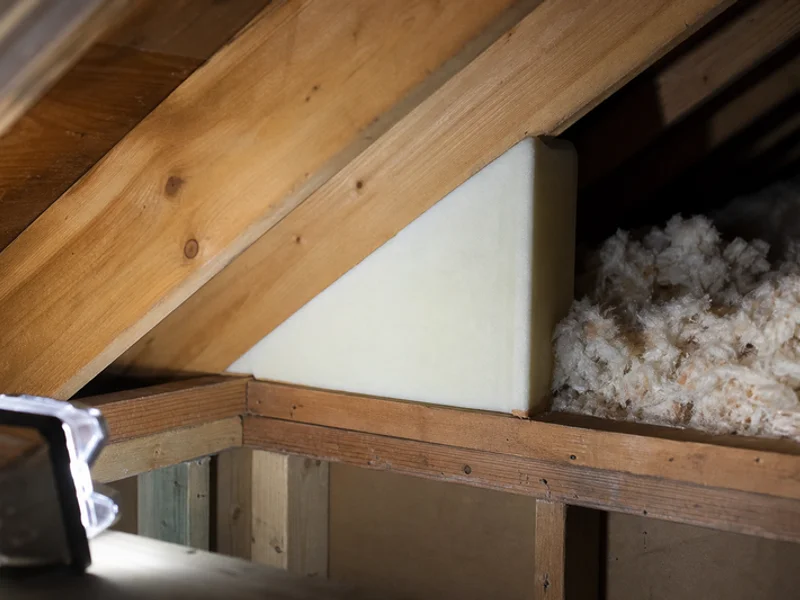
| Protective Baffles | Inside the lower attic cavity | Keep thick insulation from blocking soffit intake, maintaining the airflow channel. |
| Ridge Vents | Along the roof peak | Allow warm, moist attic air to exhaust naturally, completing the ventilation loop. |
Without open soffit vents, your attic traps heat like a greenhouse. Without a ridge vent, that trapped air has no exit path. Both conditions accelerate ice dam formation.
Our Ice Dam Prevention Process
Fixing the root cause requires addressing both the airflow balance and the physical barriers on the roof surface. Here is exactly what our service includes:
- Measure current intake versus exhaust and identify the specific imbalance
- Add ridge vents, soffit vents, or gable vents where needed to restore balance
- Install baffles so attic insulation does not block soffit airflow
- Seal air leaks in the ceiling plane that allow conditioned air into the attic
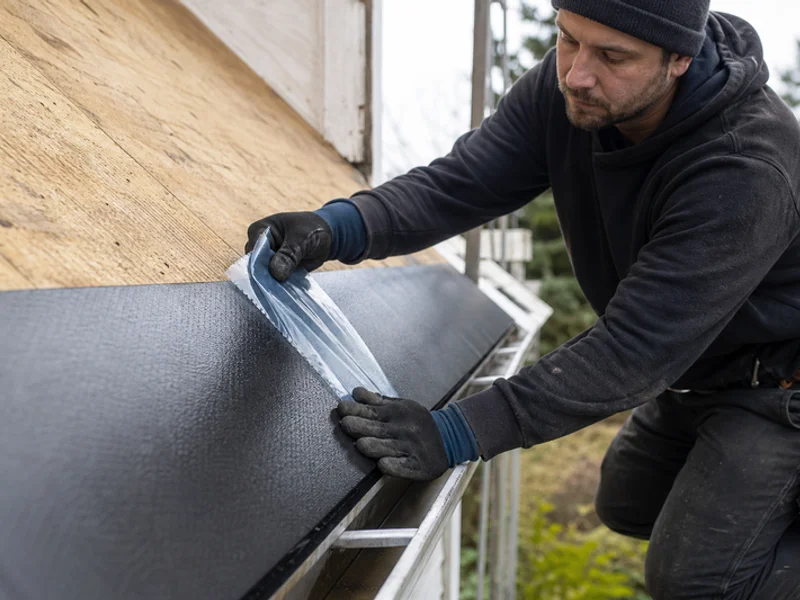
- Add ice-and-water shield at eaves, valleys, and around penetrations
For our region, energy experts recommend hitting an insulation R-value of at least R-49 using blown-in cellulose or closed-cell spray foam. This keeps your expensive heating air in the living space where it belongs, rather than leaking into the attic and melting rooftop snow.
The Ice-and-Water Shield: Your Secondary Defense
Ventilation fixes prevent ice dams from forming in the first place, but a secondary waterproof barrier protects your deck if meltwater ever does back up. We install self-sealing ice-and-water shield along all vulnerable edges, valleys, and roof penetrations.
Products like Owens Corning WeatherLock physically seal around nail penetrations, stopping any backed-up water from reaching the wooden decking beneath. The Connecticut State Building Code requires ice-and-water shield at eaves on all new roofs. If your home was built or re-roofed before this requirement, adding it during the next replacement is the strongest long-term protection available.
Repairing Damage From Past Ice Dams
If your home has already suffered ice dam damage, the repair work goes beyond ventilation. Our crew inspects and replaces any compromised roof decking, removes and replaces water-damaged insulation, and repairs interior ceiling stains and drywall damage caused by past winter leaks.
We commonly find these issues in the dense multi-family triple-deckers in Frog Hollow and the older single-family homes in South End. These building types have tight attic spaces with minimal ventilation that make them especially vulnerable to ice dam formation.
The First Winter After the Fix
The first winter after a proper ventilation repair is usually a massive relief. Homeowners tell us they finally see zero ice buildup and zero water stains for the first time in years. That is the true measure of success for this service.
You should not be standing outside in freezing temperatures chipping ice off your gutters. The smarter approach is eliminating the conditions that cause the dam to form. Contact Hartford Roofing Company for a full ventilation assessment and get your home ready before the cold months arrive.