Last updated:
Your Gutters Are Part of Your Roof System
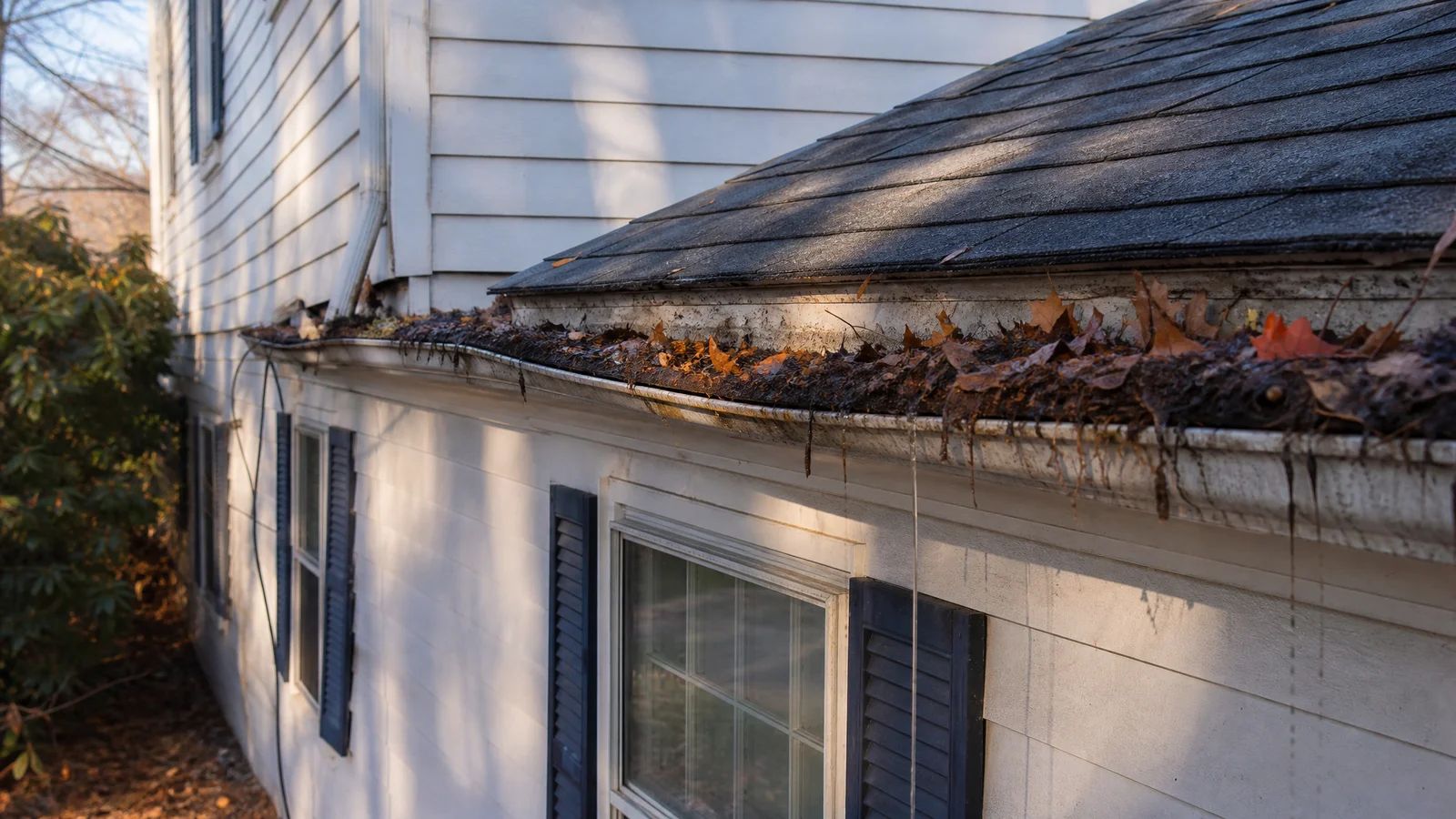
Most homeowners think of gutters as a separate accessory attached to the edge of the house. In reality, the gutter system is the final link in your roof’s water management chain. Every drop of rain your roof sheds is supposed to flow into the gutter, down the downspout, and away from the foundation. When any part of that chain breaks, water goes exactly where it should not.
Hartford Roofing Company treats gutter repair as a roofing service, not a handyman job. We inspect the drainage system, the fascia board behind it, the soffit underneath, and the drip edge where the roof meets the gutter. That roof-first perspective catches problems that a simple gutter cleaning never would.
Connecticut receives roughly 45 to 48 inches of rain and 48 to 51 inches of snow annually. That volume of water puts enormous stress on a drainage system, especially one that has not been properly maintained.

Common Drainage Problems and How We Fix Them
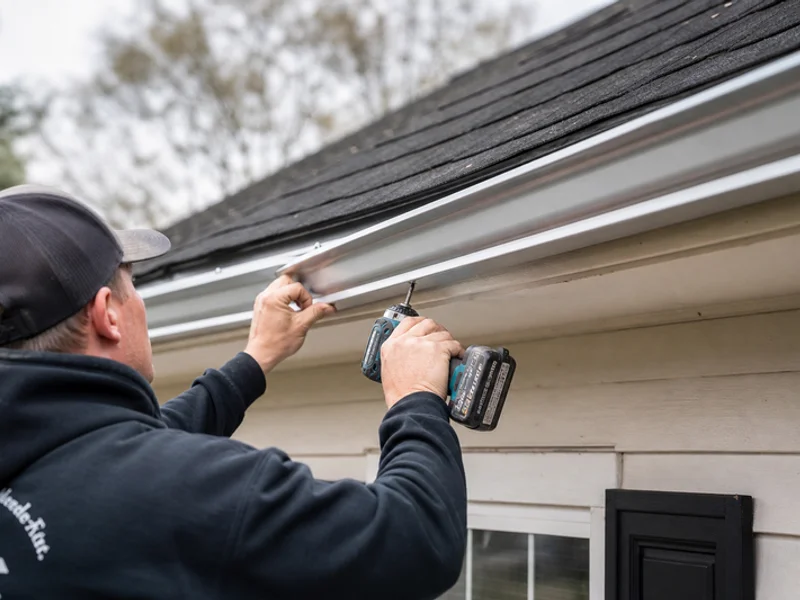
A properly functioning gutter system requires the right hardware, the correct pitch, and sealed connections at every joint. Many older homes still rely on traditional gutter spikes that slowly pull out of the wood over time. Our crews replace those outdated spikes with heavy-duty hidden hangers spaced 16 to 24 inches apart for maximum holding power.
| The Drainage Problem | The Hidden Cause | The Proper Fix |
|---|---|---|
| Sagging gutter runs | Failing traditional spikes or weak hangers | Re-hang with hidden brackets and heavy-duty screws |
| Failed seams and end caps | UV damage and extreme temperature swings | Strip old sealant and apply high-grade polyurethane |
| Poor pitch | Shifting foundation or sloppy installation | Re-pitch to the standard 1/4 inch per 10 feet of run |
| Clogged or crushed downspouts | Debris buildup or landscaping damage | Clear obstructions or install new oversized aluminum pipe |
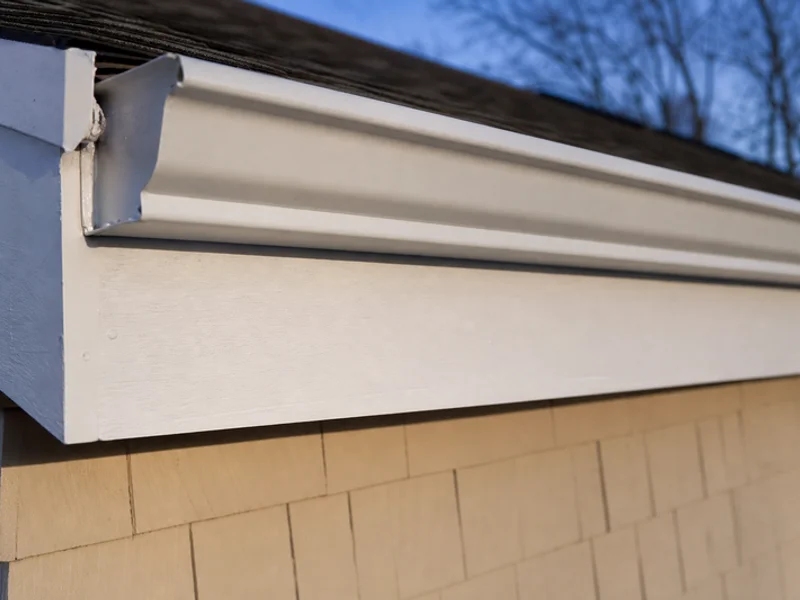
| Damaged or rotted fascia | Water wicking behind a poorly placed gutter | Replace rotted wood and add proper drip edge flashing |
| Missing downspout extensions | Settling soil near the foundation walls | Add solid extensions pushing water at least 5 feet away |
How Failing Gutters Destroy Your Roof From the Edge In
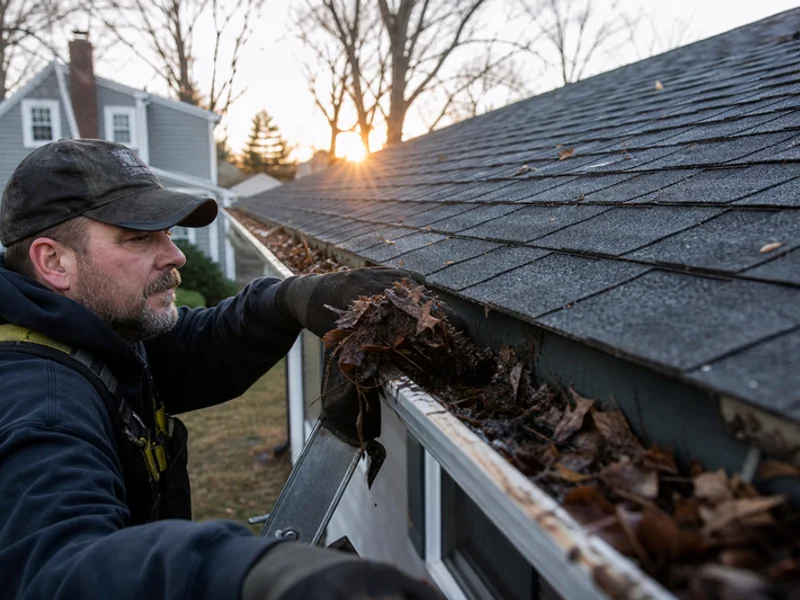
During a heavy spring downpour, overflowing gutters mostly cause a messy waterfall over the walkway. The real damage arrives when freezing temperatures return. Standing water in a clogged gutter channel freezes into a solid mass that contributes directly to ice dam formation.
We regularly see this trapped ice force water backward up the roof line and into the attic. The Insurance Information Institute reports that water damage and freezing account for nearly 24% of all homeowner property claims across the US. A $500 gutter repair today prevents a multi-thousand dollar fascia and soffit replacement next year.
“Most property owners do not realize that fixing a sagging gutter today can easily prevent a massive roof rot repair down the road. The gutter is the first line of defense at the roof edge.”
Over time, consistent overflow saturates the fascia board and completely rots the wooden soffit underneath. That rotting wood creates the perfect weak spot for high winds to peel up the drip edge during the next major storm. The cost of gutter maintenance is tiny compared to the structural repairs that neglect causes.
Gutter Guards: When They Make Sense
Not every property needs gutter guards, and we will tell you honestly whether yours does. In heavily wooded neighborhoods like the West End near Elizabeth Park, where mature oaks and maples drop heavy leaf loads, guards dramatically reduce cleaning frequency and prevent seasonal clogs.
In more open areas with fewer overhanging trees, a solid twice-a-year cleaning in spring and late fall may be all you need. We evaluate your specific tree coverage, roof geometry, and gutter size before recommending any add-on. Spending $1,200 on guards when $150 of annual cleaning does the job is not something we would suggest.
Choosing the Right Guard System
If guards make sense for your property, we install micro-mesh and reverse-curve designs that keep debris out while allowing maximum water flow. Cheap foam inserts and screen-style guards tend to clog with fine particles and pine needles within a season or two. The right product matched to your specific tree type and gutter size makes the difference between a system that works and one that creates new problems.
Protecting Hartford Homes From Foundation Damage
Downspout discharge is the overlooked piece of the drainage puzzle. Even a perfectly pitched, clean gutter system can cause foundation problems if the downspouts dump water right against the house. Settling soil and grading shifts over the years often redirect runoff directly toward the foundation walls.
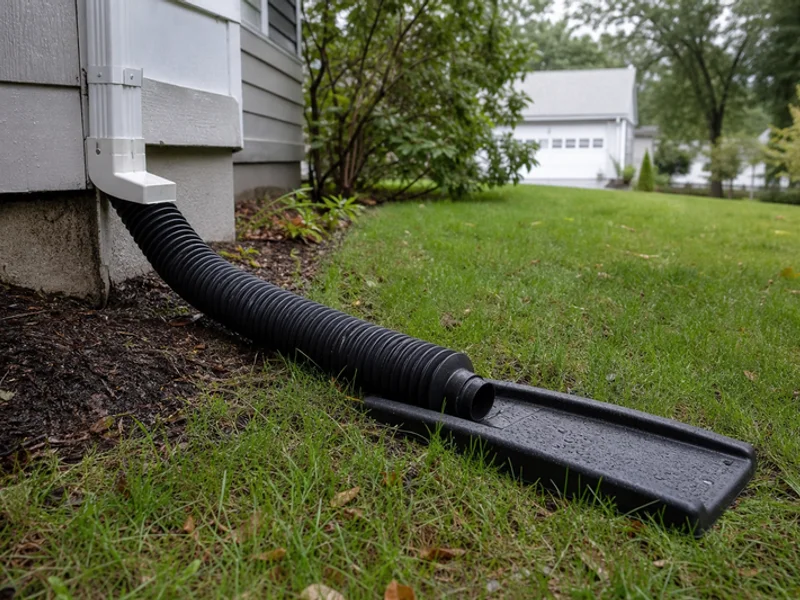
We install solid downspout extensions that carry water at least five feet away from the foundation. For properties with challenging grading, underground drain lines routed to a pop-up emitter further downhill eliminate the problem permanently.
If your gutters overflow during heavy rain, sag visibly along any section, or if you have noticed paint peeling on your fascia boards, contact Hartford Roofing Company for a full drainage system evaluation. We will inspect the gutters, the roof edge behind them, and the fascia condition, then give you a clear, honest plan to protect your home from the ground up.