Last updated:
Why Hartford’s Commercial Flat Roofs Need Specialized Attention
Flat roofing systems operate under completely different principles than the steep residential shingles most roofers work with every day. Membrane welds replace shingle overlaps, internal drains take the place of standard gutters, and complex perimeter flashing ties the entire wall system together. Hiring a residential shingle crew for a flat roof repair is one of the fastest ways to turn a small problem into a building-wide failure.
Hartford Roofing Company understands these differences because we work on commercial flat systems regularly across Hartford and Hartford County. From the insurance company office campuses in Downtown and Asylum Hill to the industrial warehouses in Brainard Industrial Park and the North Meadows, flat-roof buildings dominate the commercial landscape in this part of Connecticut.
Finding Leaks Before They Spread
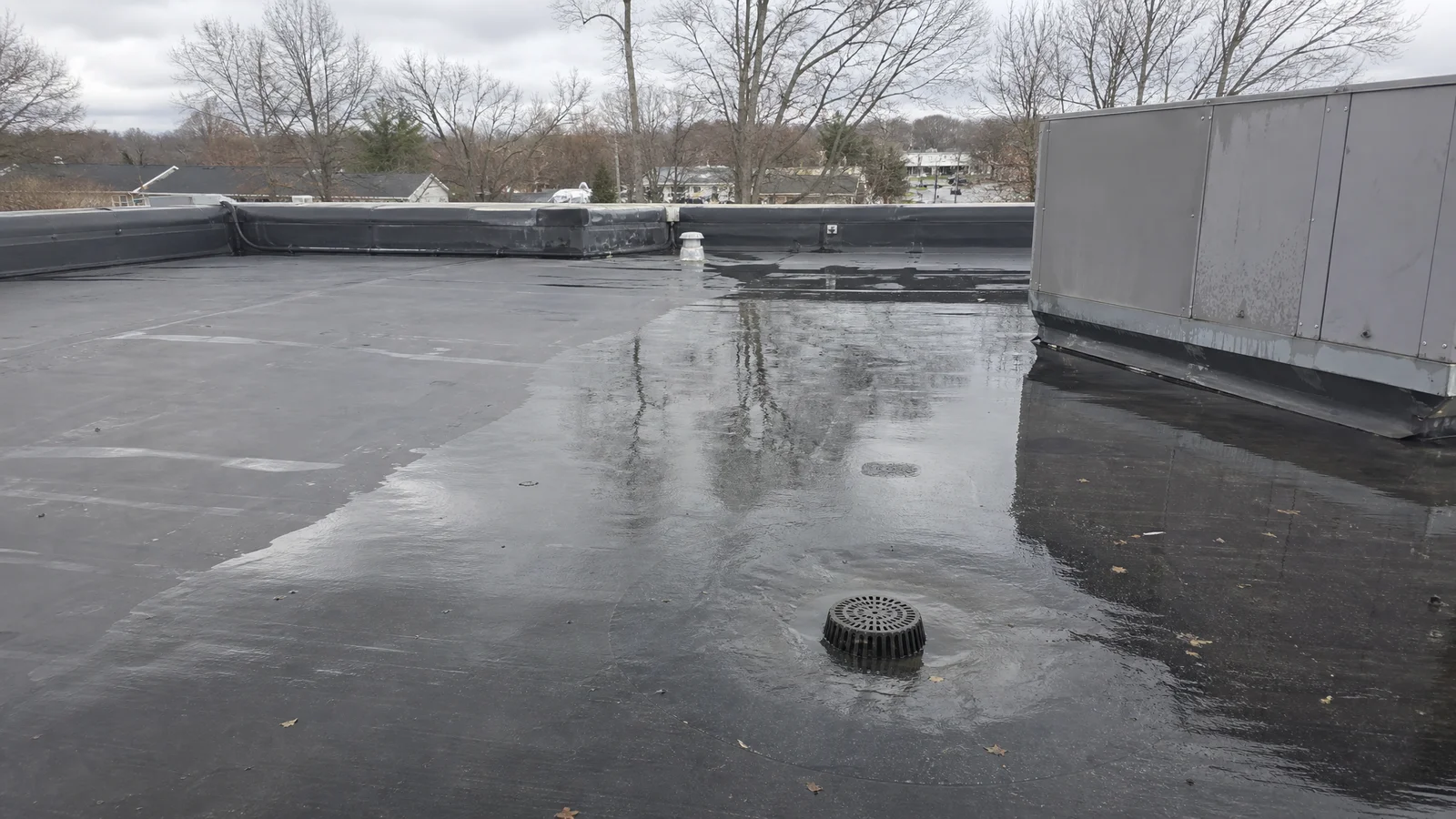
A 2026 construction industry report found that 80 percent of all commercial flat roof leaks originate at the seams or penetrations. The membrane field itself is rarely the problem. Rooftop HVAC units, plumbing vents, drain assemblies, and the perimeter where the roof meets the parapet wall are the real vulnerability zones.
Our inspection process uses thermal imaging cameras to locate moisture trapped beneath the membrane surface. Wet insulation shows up as a distinct heat signature compared to dry sections, allowing us to pinpoint the exact area that needs attention without cutting exploratory holes across the roof. This targeted approach saves money and minimizes disruption to your tenants.
We regularly repair EPDM (black rubber), TPO (typically white), and modified bitumen flat roofs. From a leaking seam over a rooftop unit to a drain that has not been cleared in five years, every issue gets an honest scope and a proper fix.
EPDM vs. TPO: Different Materials, Different Repair Techniques
The repair method depends entirely on the membrane material protecting your building. Getting this wrong voids manufacturer warranties and guarantees a repeat failure.
EPDM (Black Rubber) Repairs
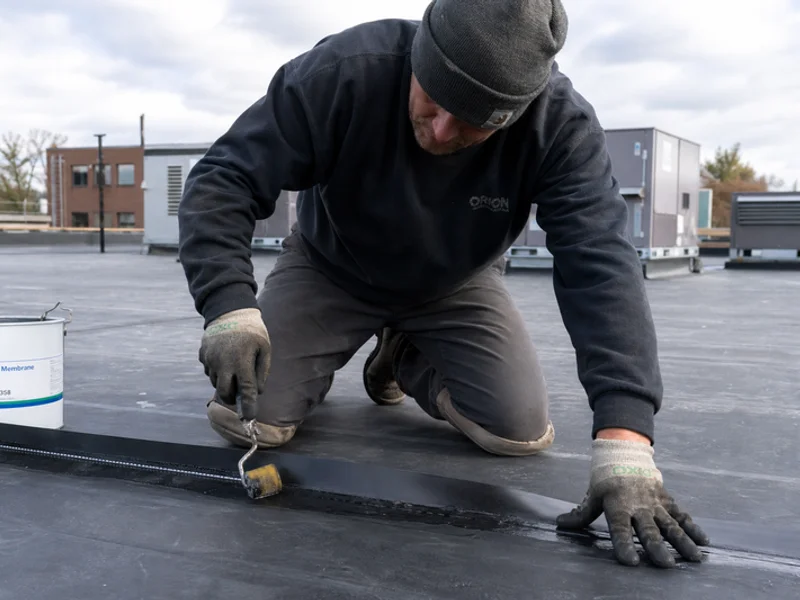
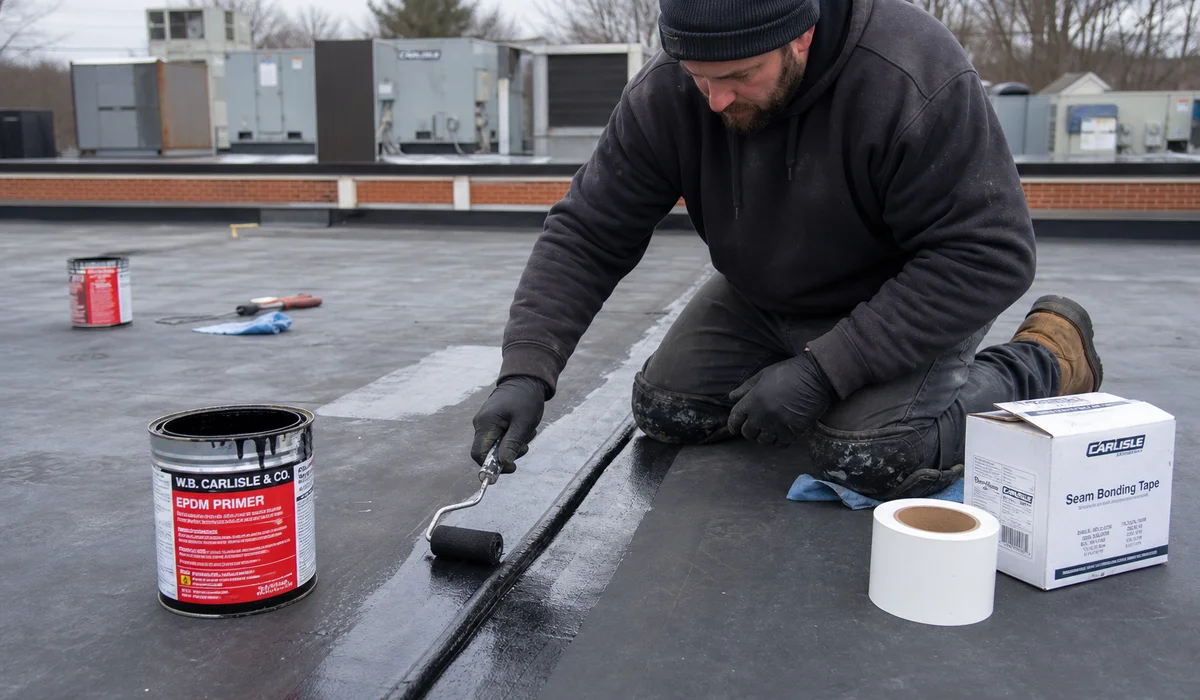
EPDM membranes commonly suffer from seam shrinkage, a problem that occurs when the rubber was not given enough relaxation time during original installation. The tension gradually pulls seams apart, creating a direct path for rainwater. We clean the area thoroughly, apply specialized EPDM primer, and bond a new patch using liquid adhesive that creates a watertight seal stronger than the original seam.
TPO (White Plastic) Repairs
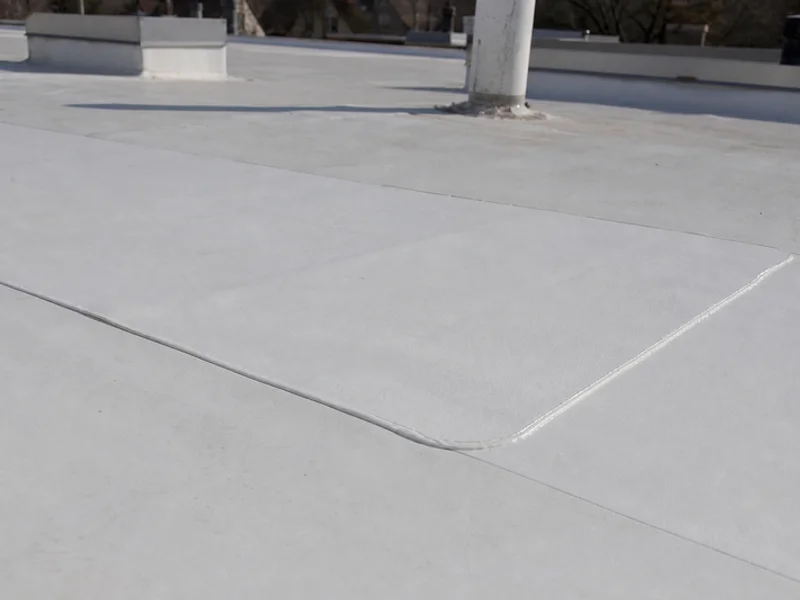
TPO roofs require precise hot-air welding to fuse the thermoplastic layers back together. Our crews use commercial-grade heat welders to create patches that blend with the original membrane and form a molecular bond, not just an adhesive connection. This technique is the only manufacturer-approved method for TPO repair.
| Feature | TPO (Thermoplastic Polyolefin) | EPDM (Ethylene Propylene Diene Monomer) |
|---|---|---|
| Material Type | White, heat-reflective plastic | Black, synthetic rubber |
| Repair Method | Hot-air welding fuses patches | Liquid adhesives and seam tape |
| Common Vulnerability | Punctures from foot traffic and dropped tools | Seam shrinkage and UV-driven material degradation |
| Expected Lifespan | 20 to 30 years | 20 to 30 years |
The Full Scope of Flat Roof Repairs We Handle
National pricing data from 2026 shows that an average flat roof repair costs between $1,200 and $5,500 depending on damage size and insulation condition. Our goal is to keep your costs on the lower end by catching problems early and repairing only what needs fixing.
Here is the complete list of commercial flat roof repairs we perform:
- Failed membrane seams (EPDM re-glue, TPO hot-air re-weld)
- Punctures and mechanical damage from foot traffic or dropped equipment
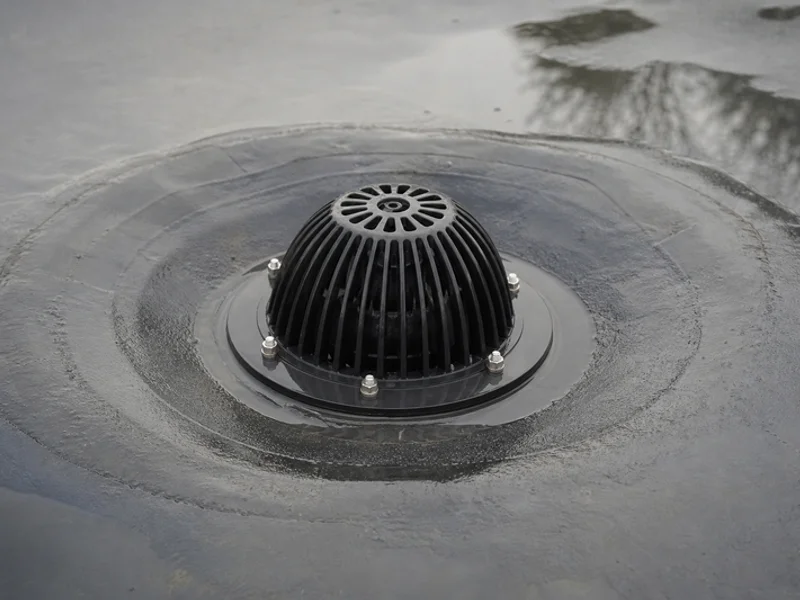
- Ponding water correction and drain failures
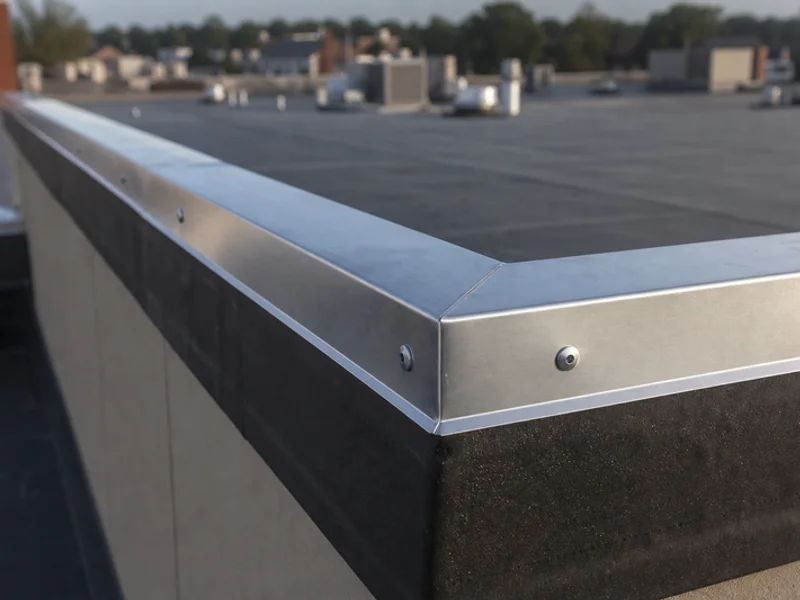
- Perimeter and wall flashing at parapet walls
- Rooftop-unit boots and penetration seals
- Coping cap and edge-metal repair
Honest Repair vs. Replacement Guidance
We will never push a full replacement when targeted repairs are the right financial decision. Data from major manufacturers like GAF and Elevate confirms that a properly installed flat roof should last 20 to 30 years. If your membrane is generally intact and the failures are localized to a few seams, a targeted repair makes sense.
If seams are failing across the entire field and multiple areas show wet insulation, replacement becomes the smarter long-term move. Trapped moisture degrades the structural decking, creating safety hazards and driving up your heating costs.
Hartford’s growing number of adaptive-reuse projects, where older industrial buildings along New Park Avenue and in the Parkville neighborhood are converted into mixed-use spaces, often require completely new roofing systems. For these larger commercial projects, we provide a full assessment and a separate replacement scope with detailed cost comparisons.
Our practice is to give you both the repair and replacement options in writing, complete with photo evidence, so you can make a confident capital expenditure decision. Protecting your building starts with a watertight roof. Reach out to Hartford Roofing Company for a thorough, no-pressure commercial flat roof inspection today.